Imagine walking into a room that doesn’t just house a bed but actually breathes with your rhythm. Whether you are retreating from a chaotic workday or waking up to the soft filter of morning light, the dimensions of your sanctuary dictate your comfort. Understanding the average bedroom size is the first step in transforming a simple “box” into a tailored haven of rest. In the modern world, where we spend more time in our private quarters than ever before, the way we utilize these square feet—whether compact, medium, or expansive—defines our quality of life. From the historical straw-stuffed mattresses of the 14th century to the sophisticated upholstered frames of 2026, the bedroom has evolved into a social and deeply personal environment.
The Evolution of the Private Sanctuary
Long before we obsessed over floor plans, the concept of a dedicated sleeping space was a luxury few could afford. In Medieval Europe, the lower classes often slept on mattresses stuffed with hay or straw, which were rolled up and tucked away during the day to save space. It wasn’t until the 18th century that cotton and wool became common, and the first coil spring mattress didn’t even arrive until 1871.
Today, our expectations have shifted. We no longer just “roll out a mat” unless we are embracing the beautiful, minimalist tradition of the Japanese tatami room, where futons are unrolled on rice-paper-lined floors and stowed in the oshiire come morning. In the Western world, the average bedroom size now accommodates not just a bed, but a reflection of personality, social status, and a suite of modern technologies including video consoles and home offices.
Decoding the Average Bedroom Size for Your Home
When we talk about “average,” it’s important to realize that size is often defined by functionality and local regulations. In many regions, a room must meet a minimum size and have specific points of egress to legally qualify as a bedroom.
Houzz, a leader in home design, categorizes over a million bedroom photos into four distinct size brackets that help homeowners find their footing:
- Compact: These are often the “cozy” retreats or guest rooms where every inch counts.
- Medium: The most common tier, providing enough breathing room for a standard dresser and nightstands.
- Large: Typically reserved for primary suites that can handle king-sized furniture and perhaps a small seating area.
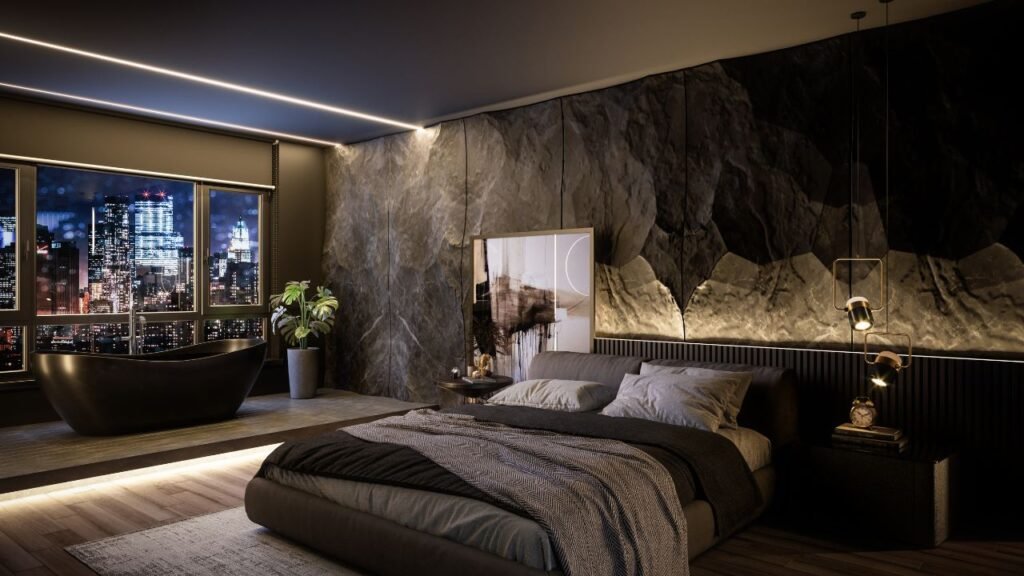
- Expansive: These “master retreats” often include extra features like wet bars, coffee stations, or even two-story layouts.
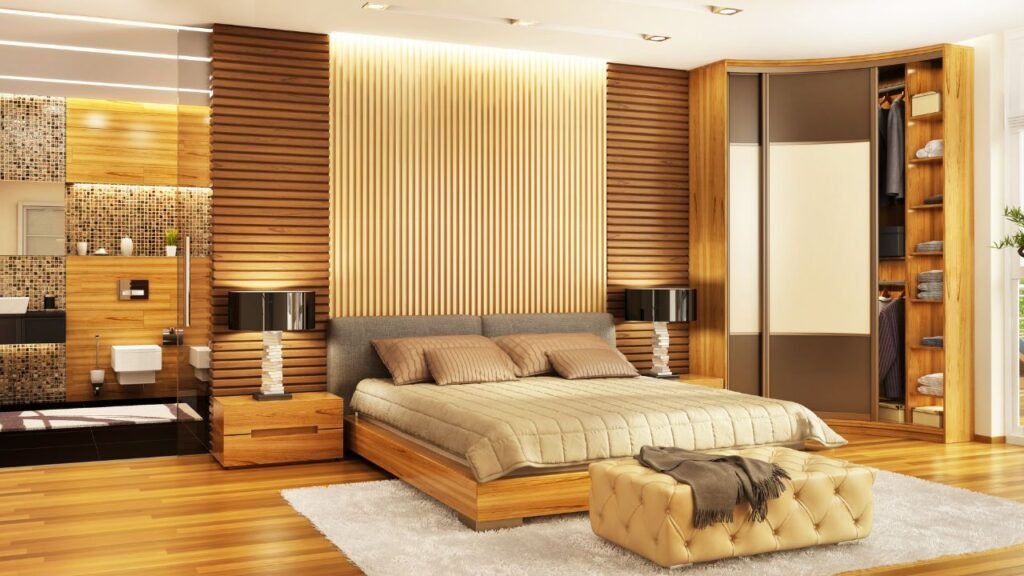
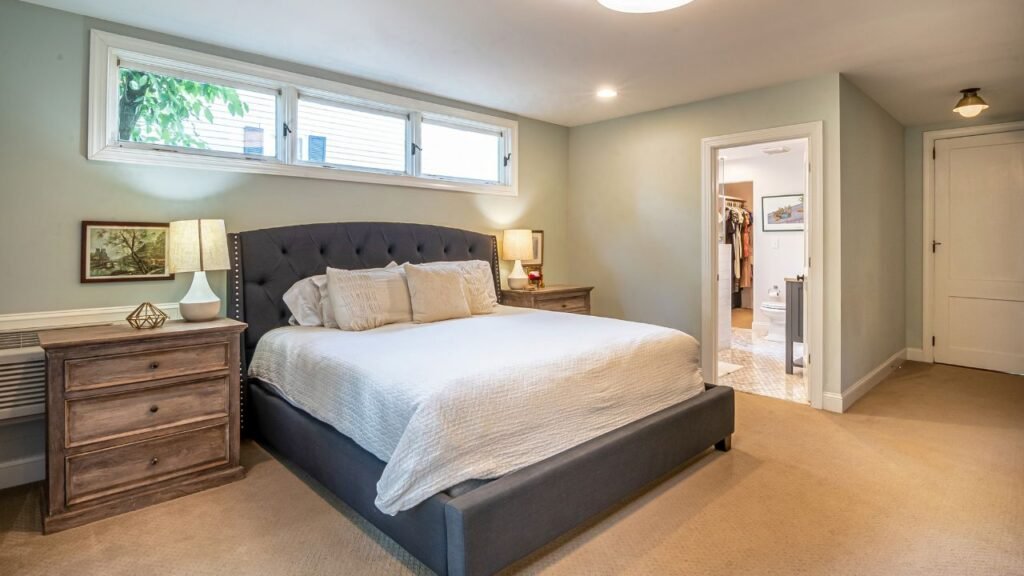
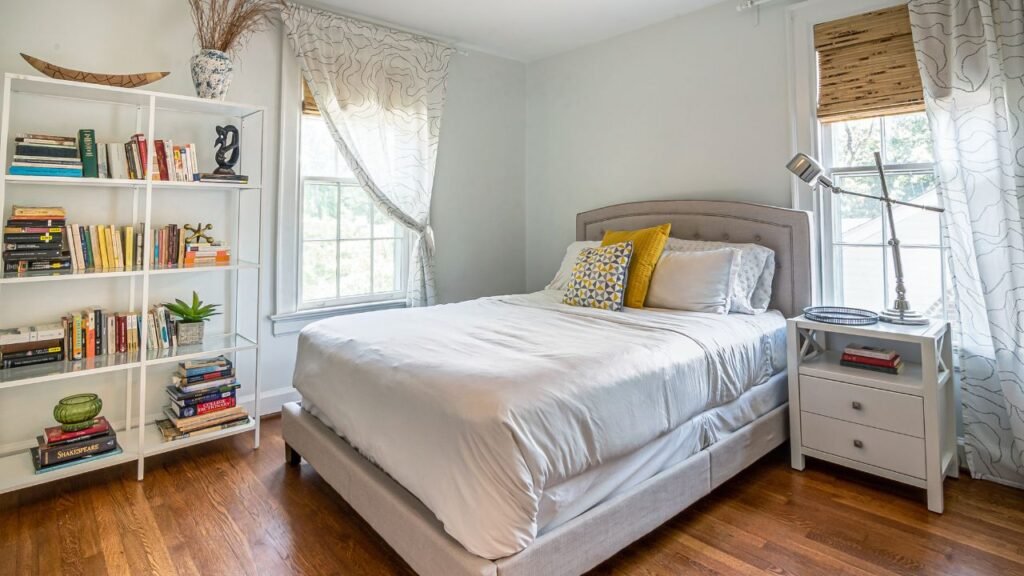
Image Alt Text: A well-furnished master suite demonstrating the average bedroom size with a king-sized upholstered bed and nightstands.
Scaling Your Style: Small Space Wisdom
If you find yourself working with a footprint below the average bedroom size, don’t despair. Renowned designers suggest that “overscaling” furniture can actually make a small room feel grander. Instead of filling a tiny room with “itsy-bitsy” pieces that create visual clutter, a bold four-poster bed or a large upholstered headboard can provide a singular, impressive focal point.
Built-in joinery is another secret weapon for those battling limited square footage. By integrating wardrobes and bedside nooks directly into the walls, you eliminate the need for bulky, freestanding furniture that eats into your floor space. This creates a seamless, “cocooning” effect, especially when you paint the walls and ceiling in a unified, moody shade like “Mister David” yellow or a calming “Oval Room Blue”.

Choosing the Right Foundation
The centerpiece of any bedroom, regardless of its dimensions, is the bed. Choosing the right size is a balancing act between the average bedroom size of your home and your personal comfort needs. Living Spaces offers a range of designs tailored for 2026 trends, from the “Dean Sand II” upholstered panel beds available in Twin, Full, Queen, and King sizes to more specialized California Kings.
When selecting your bed, consider these common dimensions:
- Twin/Full: Ideal for children’s rooms, guest spaces, or studio apartments where space is at a premium.
- Queen: The most popular choice for couples, fitting comfortably in a medium-sized room.
- King/Cal King: Best suited for large or expansive rooms, offering maximum personal space.
Beyond size, consider the material. Upholstered beds are currently trending for their “Sweet Dreams” appeal, adding a layer of soft texture that warms up the room. For a more contemporary or “Arts & Crafts” look, wooden frames offer a lighter visual weight, which can help a room feel airier.
Maximizing Storage and Organization
A cluttered room is a cluttered mind. To keep your sanctuary serene, storage must be a priority. If your room is on the smaller end of the average bedroom size spectrum, look for “smart storage” solutions.
- Storage Beds: Platforms with built-in drawers or lift-top mechanisms provide hidden space for seasonal clothing and extra linens.
- Tall Chests: When you can’t expand outward, expand upward. A 5-drawer or 6-drawer tall chest provides significant storage without a large footprint.
- Multi-functional Units: In guest rooms that double as offices or craft rooms, consider a Murphy bed or a wall unit that houses a fold-out desk.
The Emotional Layer: Textiles and Lighting
Once the furniture is in place, the true character of the room comes from what you layer on top. Designers emphasize that bed linens “really make bedrooms”. Instead of defaulting to an all-white “colossus” of a duvet, try incorporating patterned blankets, silk pillowcases, or even antique suzanis for a sense of history and warmth.
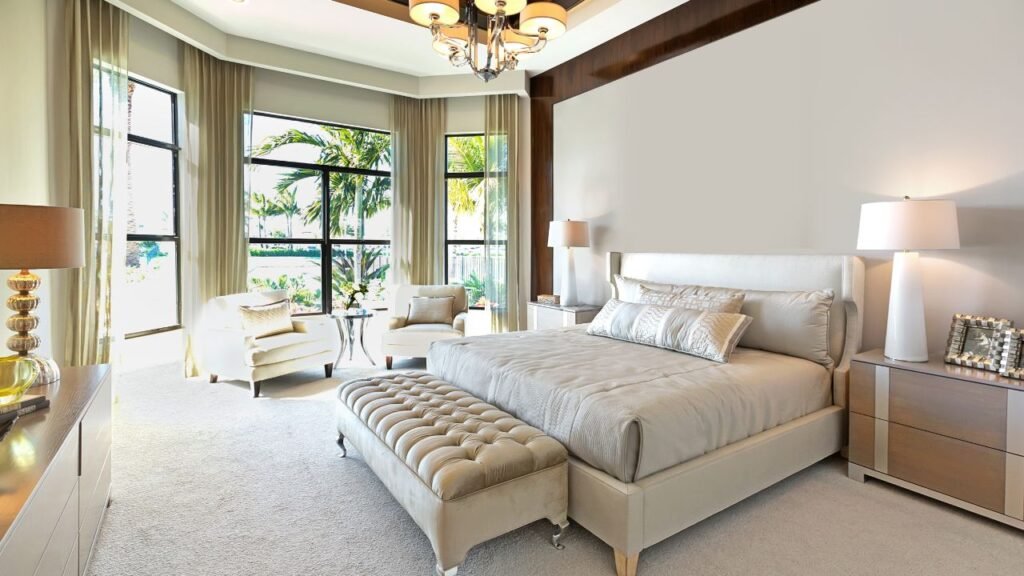
Lighting is equally vital. A master retreat might feature a standard or corner fireplace with a stone surround to create a cozy glow. For tasks, bedside lamps or wall-mounted sconces with linen shades provide a soft, textured light that’s perfect for late-night reading. If you’re feeling bold, a “Beach Pebble” pendant or an elegant chandelier can elevate the room from functional to fabulous.
Cultural Perspectives on Space
It’s fascinating to see how the average bedroom size and its importance vary globally. In the West, we prioritize the bedroom as a private, personalized “retreat”. However, in Japanese culture, the house is often seen as a unified family space where areas are seldom personalized. The flexibility of the tatami room—which can serve as a living area by day and a bedroom by night—is a masterclass in spatial efficiency that many modern apartment dwellers are beginning to emulate through modular furniture and sliding “shoji” partitions.
Making the Investment
Investing in your bedroom is an investment in your health. A quality mattress with advanced cooling technology or pressure relief isn’t just a purchase; it’s the foundation for your best sleep. Many retailers now offer flexible financing, such as 60-month plans or “no interest if paid in full” options, making that dream king-sized suite more accessible than ever. Additionally, look for “Care Free” protection plans that cover accidental stains or structural failures, ensuring your sanctuary stays pristine for years to come.
Conclusion: Your Room, Your Rules
Whether you are living in a miniature cottage in the Cotswolds or an expansive modern farmhouse in New York, the average bedroom size is merely a starting point. The true measure of a bedroom is how well it serves your need for escape and restoration. By choosing the right scale of furniture, embracing smart storage, and layering textures that tell your story, you can dominate the layout of any space.
Ready to transform your sleep? Explore the latest 2026 designs and find the pieces that fit your life perfectly. From upholstered beds that invite you in to “just right” sofas for your seating nook, your dream sanctuary is only a few choices away