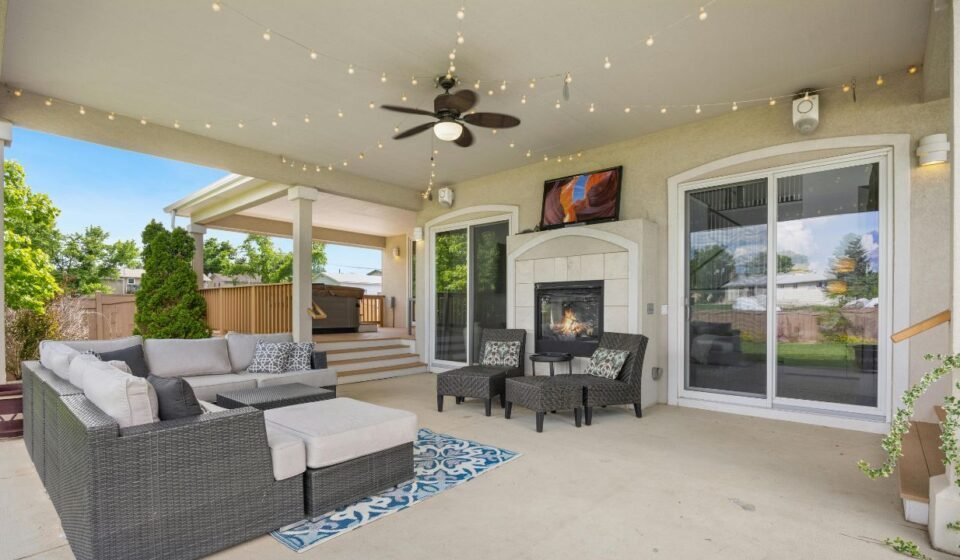

Porch ideas for houses can do more than make an entrance look polished. The right update can create a cooler place for morning coffee, a practical drop zone for muddy shoes, or a welcoming setting where neighbors linger after dinner. Even a narrow stoop has potential when every inch is planned around how the household actually lives.
The best porch does not look pasted onto the front of the house. It feels connected to the roofline, windows, materials, and landscaping, while adding comfort the original design may have missed. A simple bench, a well-placed light, and a little shade can sometimes change the mood more than an expensive rebuild.
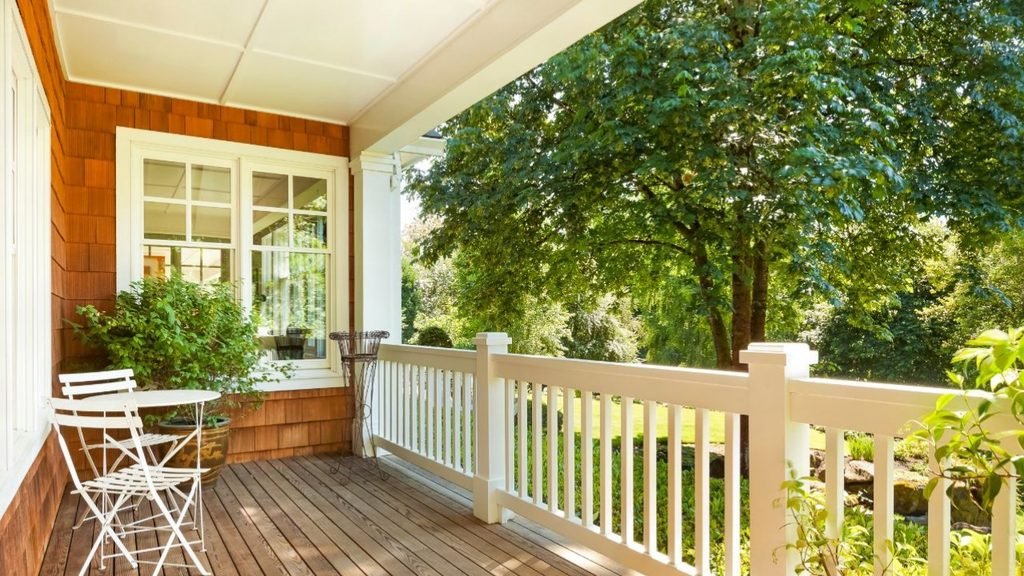
This guide covers 12 useful upgrades for different layouts and lifestyles, including porches with a view, compact spaces, gardens, balconies, pools, decks, pergolas, and wraparound porches. Each idea includes a practical way to judge the fit before buying materials.
| Design principle: Start with comfort and circulation, then choose finishes. A beautiful porch that blocks the door, traps water, or gets unbearable afternoon sun will quickly become an expensive storage shelf. |
Porch ideas for houses: 12 upgrades with purpose
1. Frame the entry with a generous landing
If the front door opens directly onto a cramped step, begin with a defined landing. A platform about 5 feet wide and 6 feet deep gives one person room to open the door while another waits. Use slip-resistant pavers, sealed concrete, or textured composite boards, and keep the walking route clear from the driveway to the threshold.
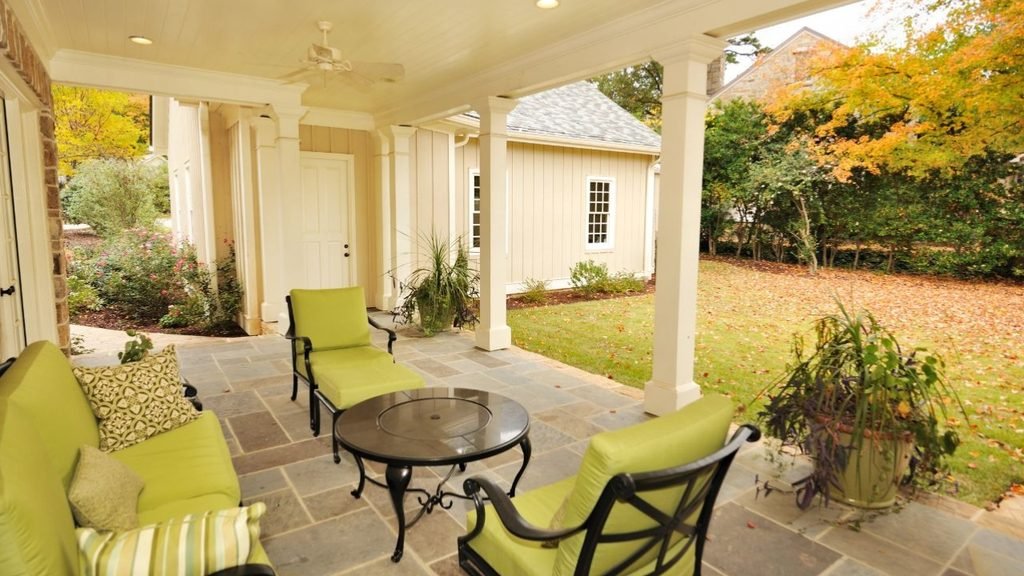
Match the landing to the architecture. A brick-faced house benefits from brick or warm-toned pavers, while a modern exterior may suit large-format concrete slabs and a simple metal handrail. The goal is a deliberate arrival, not a collection of unrelated materials.
2. Make a small porch feel larger
The smartest porch ideas for houses with a small space protect movement first. Choose one slim bench, a pair of folding chairs, or a wall-mounted shelf instead of several bulky pieces. Furniture no deeper than 20 to 24 inches leaves more room for the door swing and daily traffic.
Use a pale ceiling, a mirror only where it will not create glare, and one pendant or wall light to add visual depth. A vertical planter can bring in greenery without stealing floor area. In a tiny porch, restraint is not a compromise; it is what makes the space feel calm rather than crowded.

3. Shape the view instead of competing with it
For porch ideas for houses with a view, keep the horizon open and let the landscape do the visual work. Low-profile seating, a narrow drink ledge, and a transparent or cable-style guard can preserve sightlines where local safety rules allow it. Place the main chairs at an angle so people can look outward without twisting away from conversation.
Add shade that can be adjusted, such as a retractable canopy or outdoor roller shade. It protects eyes and furniture while preserving the view when the weather is pleasant. Choose corrosion-resistant hardware if the porch faces strong wind, salt air, or frequent rain.
4. Extend a garden onto the porch
Porch ideas for houses with a garden work best when the transition between planting beds and seating feels intentional. Group containers in three heights, such as a floor pot, a medium planter, and a hanging basket, while leaving at least 36 inches for a clear walking route.
Use planters with drainage holes and saucers that protect the surface. A narrow trellis can add privacy without becoming a heavy wall, and herbs near the kitchen door make the porch useful as well as attractive. Repeat one garden material, such as terracotta, timber, or stone, so the planting scheme relates to the house.

5. Treat a balcony as an outdoor room
Porch ideas for houses with a balcony should begin with weight, drainage, and access rather than decoration. Confirm the structure can support the furniture and planters you want, and keep drains and inspection points unobstructed. Lightweight resin, aluminum, and compact folding furniture are easier to rearrange than heavy masonry pieces.
Create a useful triangle with one seat, one small surface, and one vertical feature such as a privacy screen or narrow planter. A 30-inch round café table can be enough for two people. Check railing height, child safety, and local requirements before adding screens or hanging elements.
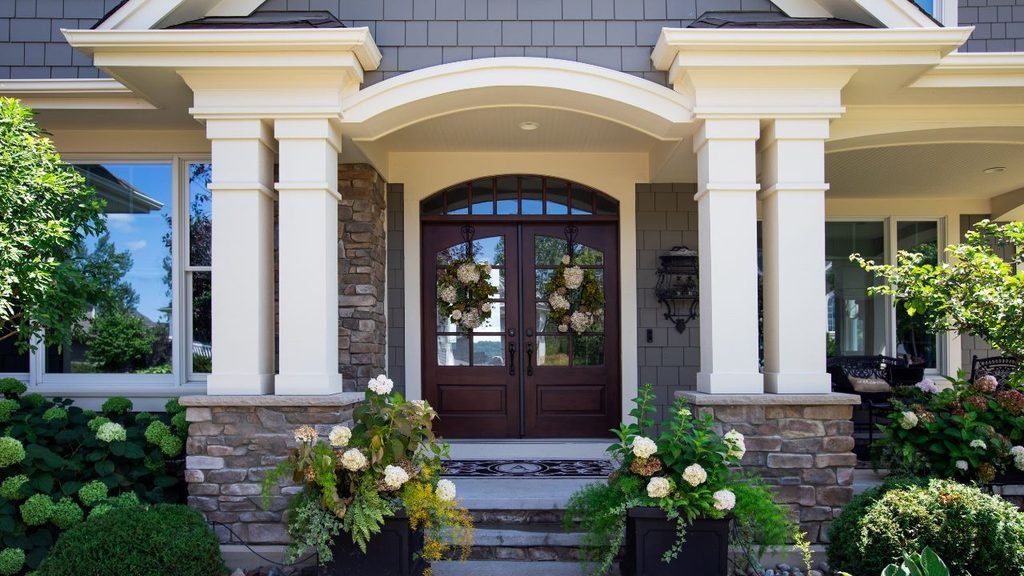
6. Build a cooler poolside porch
For porch ideas for houses with a pool, safety should guide the layout. Select flooring with a textured, slip-resistant finish and plan a clear path between the house, seating, and pool area. Avoid loose rugs that can shift when wet, and choose fabrics labeled for outdoor use so splashes do not turn every cushion into a maintenance project.
Use a shaded lounge zone at least 8 feet from the water’s edge when the site allows, with a small table for towels and drinks. A ceiling fan, retractable shade, or pergola roof can make the area more comfortable. Keep electrical fixtures and extension cords away from wet zones, and use properly rated outdoor fittings.
7. Connect a porch to a deck
Porch ideas for houses with a deck should make the change in level and function obvious. Use a step, border, or change in board direction to signal where the covered entry ends and the open entertaining area begins. Keep stairs well lit, with handrails that remain easy to grip in rain or cold weather.
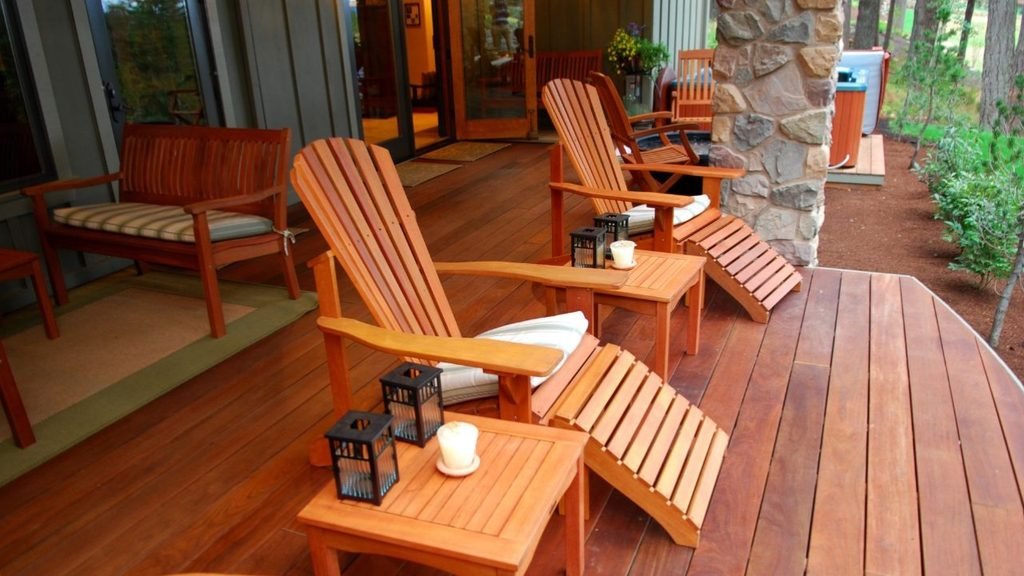
Reserve the porch for arrival, shoes, and quieter seating, then use the deck for dining or larger gatherings. Composite decking reduces some upkeep, while treated timber can offer a warmer look with a regular sealing schedule. Leave expansion gaps and allow air to move under the boards so moisture does not linger.
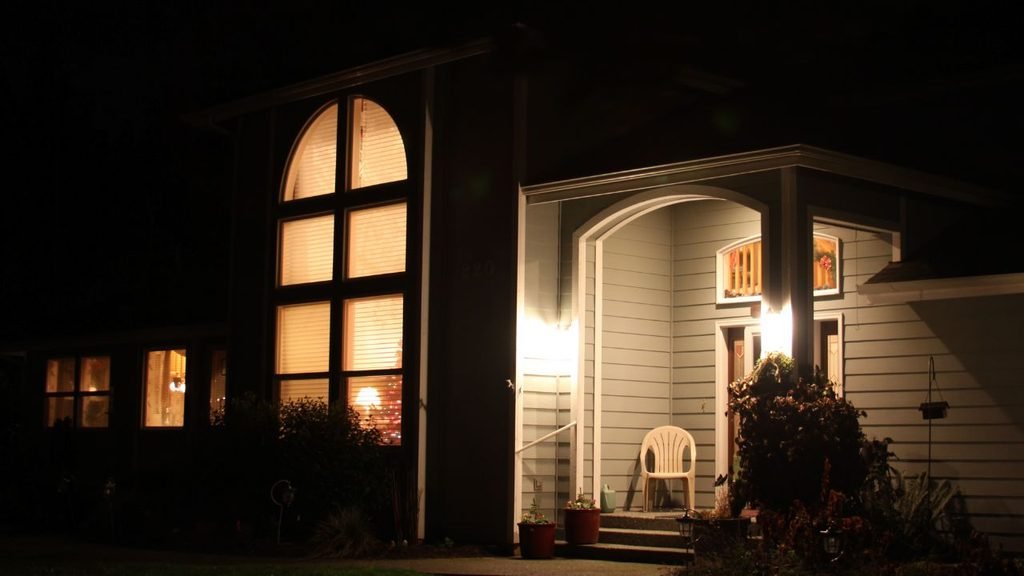
8. Use a pergola for layered shade
A pergola is valuable when a porch needs shade without feeling enclosed. For porch ideas for houses with a pergola, size the structure to the furniture rather than the other way around: a 10-by-12-foot footprint can accommodate a small table and four chairs, while a narrower 8-by-10-foot version may suit two loungers.
Add slatted timber, retractable fabric, or climbing plants according to the amount of sun and maintenance available. Anchor posts securely, check overhead clearance, and keep vines away from gutters and roof edges. Repeat the pergola’s finish on shutters, trim, or doors to make it look like part of the original design.
9. Add privacy without closing in the porch
Privacy works best in layers. Start with the direction of unwanted views, then combine one structural element with one soft element: a slatted screen and curtains, a hedge and a planter, or a half-height wall and tall grasses. Leave gaps for airflow, especially on a hot, enclosed porch.
Outdoor curtains should hang clear of cooking equipment, heaters, and open flames. Choose solution-dyed fabric or another weather-resistant textile, and install tiebacks so wind does not turn the porch into a sail. A screen that blocks every angle can make a porch darker, so protect the sightline that matters most.
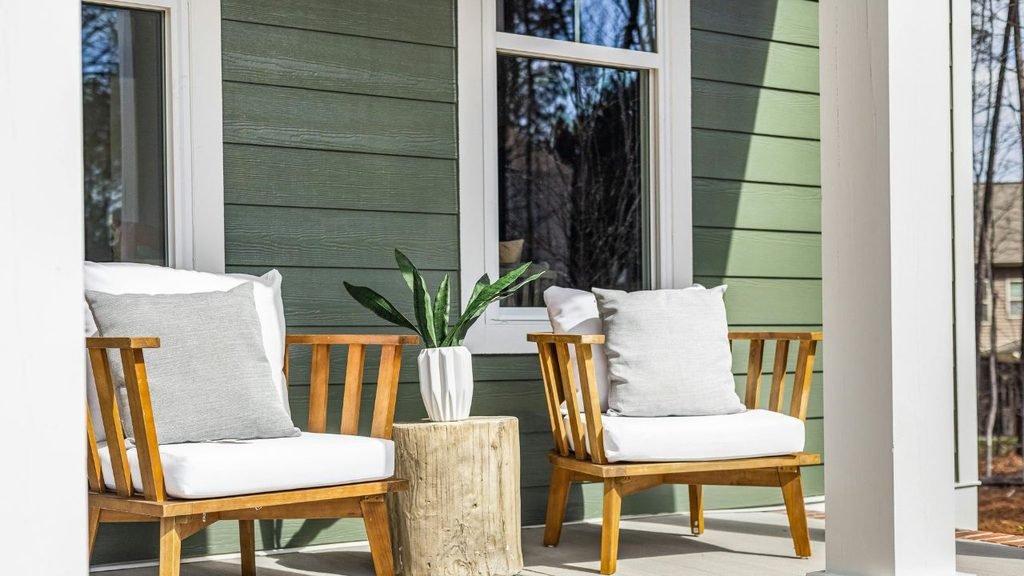
10. Design lighting for safety and atmosphere
Layered lighting keeps a porch useful after sunset. Use a bright, shielded fixture at the door, softer wall or pendant lighting for seating, and low-level path lights at steps or changes in surface. Aim light downward where possible to reduce glare and make edges easier to read.
Choose fixtures rated for their exact outdoor location, and place switches where they can be reached before stepping onto stairs. Warm white light usually feels more relaxed than a harsh blue tone. Timers or motion sensors can handle arrival lighting without leaving every fixture on all night.
11. Solve drainage and maintenance before styling
The most overlooked porch ideas for houses often involve water. Check that the floor slopes away from the home, gutters discharge well beyond the foundation, and planters do not sit over door thresholds or block drains. A small puddle that remains after a storm is a warning to fix the surface before adding furniture.
Select finishes according to the time available for upkeep. Powder-coated metal, sealed composite, washable outdoor fabric, and properly treated timber each have different care needs. Keep a simple seasonal checklist: clear leaves, inspect fasteners, wash surfaces, and look for cracked sealant or loose railings.
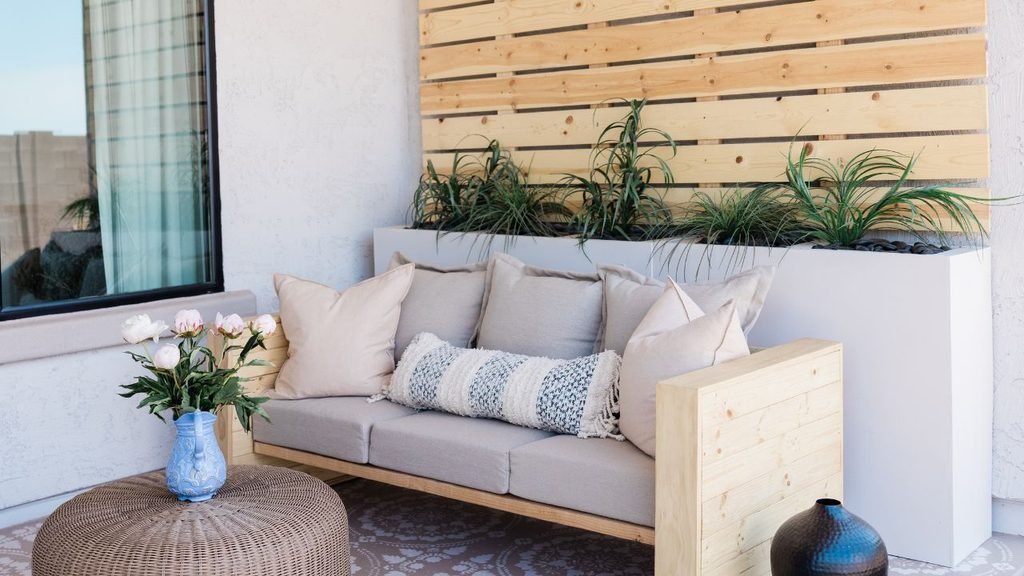
12. Match the update to the house architecture
The most convincing porch remodels borrow proportions and details from the home. Repeat the roof pitch, trim width, window color, or masonry pattern instead of introducing a completely unrelated style. A contemporary house may suit clean lines and restrained materials; a cottage can carry more texture, painted timber, and informal planting.
When planning porch ideas for houses 2027, prioritize flexible choices over short-lived trends. A durable floor, comfortable seating, efficient shade, and lighting that can be repaired will still matter when surface colors change. Design the permanent pieces carefully, then refresh cushions, pots, and accessories as tastes evolve.
How to choose the right porch update
Start by watching the porch at different times of day. Note where rain lands, when the sun becomes uncomfortable, how people enter with bags, and where conversations naturally happen. Then set a priority order: safety first, weather control second, comfort third, and decorative details last.
Use this quick guide to narrow the options:
| Situation | Best priority | Good starting move |
| Hot afternoon sun | Shade and airflow | Retractable canopy or pergola |
| Limited floor area | Clear circulation | Folding or wall-mounted furniture |
| Wet climate | Drainage and durable finishes | Textured flooring and extended downspouts |
| Open neighborhood view | Privacy with light | Slatted screen, curtains, or planting |
Before ordering, measure the door swing, stair width, furniture footprint, and route for moving large pieces. Leave at least 36 inches for a comfortable main walkway where possible. Request material samples outdoors because colors can look different in direct sun, shade, and evening light. If the update changes structure, railings, wiring, drainage, or roof loads, check local requirements and use a qualified professional where needed.
FAQ
What is the easiest porch update to make first?
Lighting is often the fastest improvement because it changes safety and atmosphere without taking up floor space. Add a properly rated entry fixture, illuminate steps, and use one softer light near seating. Pair it with a durable doormat and a single plant for an immediate, manageable refresh.
How do you make a porch comfortable in hot weather?
Start with shade that matches the sun’s direction, then improve airflow with a fan or open-sided design. Choose breathable cushions, pale heat-resistant surfaces, and furniture that can be moved out of direct sunlight. Shade is more effective when it covers the seating area rather than only the doorway.
What should go on a narrow porch?
Choose one purpose and keep the center open. A bench no deeper than 20 to 24 inches, a slim shelf, and a vertical planter can provide seating, storage, and greenery without blocking circulation. Avoid placing tall objects beside the door where they interfere with the handle or line of sight.
How much should a porch update cost?
A small styling refresh may involve a few hundred dollars, while new flooring, shade, railings, or electrical work can move into the low thousands or more. Treat these as planning ranges, not guarantees. Get itemized quotes for structural work and compare durability, installation, maintenance, and drainage—not just the initial price.
Conclusion: build the porch your routine is missing
The best porch is not the one with the most decoration. It is the one that handles the weather, supports the way people enter and relax, and looks as though it belongs to the house. Start with a clear path, comfortable shade, reliable lighting, and materials suited to the local conditions; then add planting, privacy, and personality.
Whether the project is a compact stoop or a generous wraparound porch, thoughtful porch ideas for houses can turn unused edges into everyday living space. Choose one improvement that solves a real problem, measure before buying, and build from there.
Ready to begin? Walk the porch at morning, midday, and evening, write down the three biggest frustrations, and plan the smallest upgrade that addresses the first one.