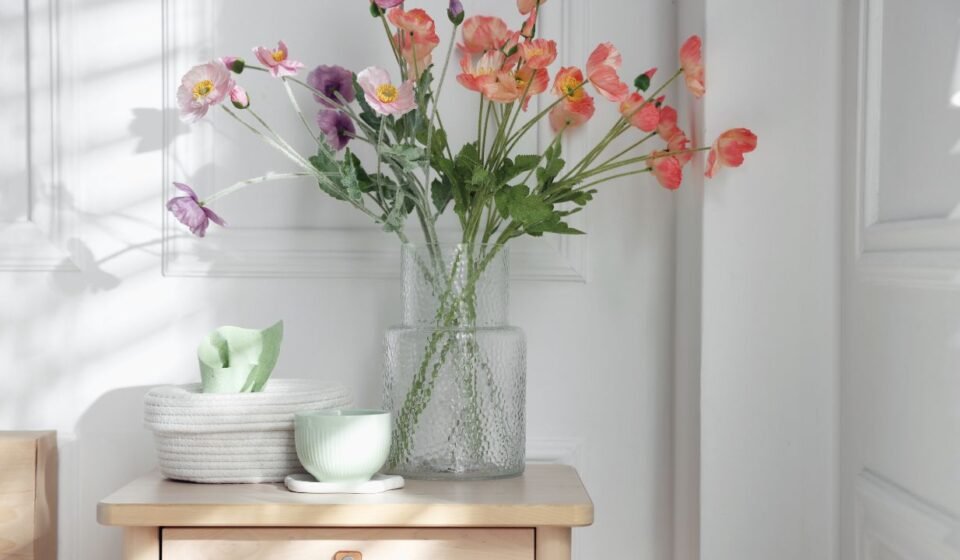

A cramped bedroom does not mean giving up a bedside surface. The right night stands for bedroom spaces can hold a lamp, phone, book, water, and glasses without crowding the room. Start with the space available, then choose storage, height, and movement based on your daily habits.
Measure Before Choosing Night Stands for Bedroom
Small furniture still needs the right proportions. A nightstand that looks compact online may block a drawer, cover an outlet, or leave too little room to walk.

Measure the space beside and around the bed
Measure from the bed frame to the nearest wall, door, radiator, curtain, or other obstruction. Check both width and depth, then compare the nightstand height with the top of your mattress.
Leave enough clearance to make the bed and walk past it comfortably. Use painter’s tape or a cardboard outline to mark the footprint before buying. Test whether cabinet doors and drawers can open fully without hitting the bed.
Match storage to your bedside habits
Choose an open shelf for books, glasses, and items you reach for often. A drawer or cabinet works better for medication, chargers, tissues, and personal items you want hidden.
Open shelving can hold baskets or small bins to control clutter. Skip deep storage if you only need space for a lamp and phone. Extra capacity often becomes a place for items that belong elsewhere.
Keep the visual weight light
Slim legs, open shelving, pale finishes, and wall-mounted designs help a small bedroom feel less crowded. Coordinate the nightstand height and finish with the bed so the furniture looks planned.
Visible floor space also makes cleaning easier. Avoid oversized tops and bulky hardware in narrow rooms. If you choose a tall, slim piece, make sure its base is wide or weighted enough to prevent tipping.
Use Walls and Bed Frames to Free Up Floor Space
Lifting bedside storage off the floor improves circulation and keeps dust from collecting around furniture legs. These three ideas work well when the gap beside the bed is too narrow for a standard table.

Floating shelf nightstand
A floating shelf is often the best choice when floor space is nearly gone. Pick a depth that holds your lamp, phone, and water without extending far into the walkway.
Mount it into a wall stud, or use hardware rated for your wall type. A small raised lip or tray keeps glasses and remotes from sliding off. Add a cable pass-through, or place the shelf close to an outlet.
If one shelf feels limited, add a second shelf above it for books or a small basket. Keep heavy lamps on a shelf with a suitable weight rating.
Wall-mounted bedside cabinet
A compact wall-mounted cabinet gives you concealed storage while leaving the floor clear. Choose a shallow design so it does not project too far into the room.
Check the door or drawer swing before installation. It should open without striking the bed or blocking the walkway. Use the cabinet for chargers, medication, and other small items that make an open surface look messy.
Confirm the wall structure and the cabinet’s weight limit. A handle-free or push-to-open door can create a cleaner profile in a tight space.

Headboard with built-in nightstands
A headboard with shelves, ledges, or cubbies can replace two separate bedside tables. This option works well when both sides of the bed need storage but the room has little side clearance.
Look for a ledge wide enough for daily essentials and cubbies for items that need to stay hidden. Some designs include outlets or built-in lights, which can reduce cord clutter.
Check that the headboard fits your bed frame and does not cover existing outlets. Keep the ledge limited to essentials so it does not become an overloaded shelf.
Choose Narrow Furniture That Does More
Freestanding furniture suits renters and anyone who cannot drill into the wall. These options keep the footprint small while adding storage or flexibility.

Slim pedestal or narrow drawer nightstand
A tall, narrow nightstand works when width is limited but vertical space remains available. Look for a small top paired with at least one drawer or lower shelf.
Choose a weighted base or a design with enough width to stay stable. A small drawer needs an organizer, since loose chargers and glasses can quickly become tangled.
Place the tallest item toward the wall side of the surface. Avoid setting a heavy lamp on an ultra-narrow table that wobbles when touched.
Nesting tables for adjustable bedside space
Nesting tables can act as one compact nightstand or two separate surfaces. Keep the smaller table tucked beneath the larger one during normal use.
Pull it out when you need a place for a guest’s book, folded laundry, or extra items during cleaning. Use the lower table for baskets or books. Choose sturdy legs and feet that move without scratching the floor.
Slim rolling cart as a movable nightstand
A narrow utility cart offers several storage levels and moves when you clean or rearrange the room. Keep the top tier for a lamp, phone, and water.
Lower tiers can hold books, baskets, or spare linens. Locking casters stop the cart from rolling away during the night. Check its height against the mattress and make sure it can pass between other furniture.
Add Flexibility With Dual-Purpose Bedside Furniture
When every piece must earn its space, choose furniture with more than one use. These three nightstand ideas can support bedside needs while helping with seating, storage, or room access.

C-table or slide-under bedside table
A C-table slides beneath or over the bed, making it useful when there is no room for a table beside the frame. The top can hold a book, laptop, drink, or small lamp.
Check that the base fits under the bed without hitting the frame. Choose a weighted base to reduce wobbling, and make sure it does not interfere with getting in or out of bed. Move it away when you need more walking space.
Corner shelf or ladder-style nightstand
Corner shelves use space that a standard rectangular nightstand may waste. Keep daily items on the lowest easy-to-reach shelf, then use higher shelves for books, décor, or spare bedding.
Ladder-style shelving needs a wall anchor when the manufacturer requires one. Avoid placing heavy objects on high shelves. A narrow corner unit can add useful storage without creating a wide obstacle beside the bed.
Storage ottoman or compact bench
A storage ottoman or compact bench can provide seating, hidden storage, and a softer look. Choose a flat, firm top that can safely hold a tray for drinks and small items.
Use the inside for blankets, pillows, or seasonal accessories. Keep the piece low enough to sit comfortably beside the mattress. Avoid soft, unstable designs if you plan to place a lamp or breakable objects on top.
Make a Small Nightstand Safer and Easier to Use
A space-saving nightstand should support your routine without creating new hazards. Good lighting, tidy cords, and stable furniture matter as much as the size.
Build a compact bedside setup
Keep the surface limited to items you use every day. A small tray can group glasses, lip balm, and a watch without spreading them across the top.
Use a wall sconce, clip-on light, or lamp with a small base when tabletop space is tight. Store backup supplies and duplicate chargers elsewhere. Your bedside area should hold essentials, not the whole bedroom’s loose items.
Manage cords without losing surface space
Route charging cables along the back or underside of the nightstand. Adhesive clips and cable sleeves can keep cords attached to the furniture instead of across the floor.
Keep power strips ventilated and easy to reach. Never run charging cables through a walking path. A short cable or small charging dock can prevent the surface from becoming a tangled pile.
Check stability and nighttime access
Secure tall, narrow, or ladder-style furniture to the wall when required. Use proper hardware for floating shelves and cabinets, and follow the maker’s weight limit.
Keep breakable items away from the edge. Drawers, doors, and casters should work without hitting the bed. Do not block outlets, vents, bedroom doors, or clear paths around the room.
Choose the Nightstand Idea That Fits Your Bedroom Best
The best night stand for bedroom storage depends on the room’s main restriction. Match the design to the problem you need to solve:
- Choose a floating shelf when floor space is nearly nonexistent.
- Choose a wall-mounted cabinet when hidden storage matters most.
- Choose a headboard with built-in storage when both sides of the bed need compact surfaces.
- Choose a narrow pedestal, nesting table, or rolling cart when wall mounting is not practical.
- Choose a C-table when the surface must move or slide under the bed.
- Choose corner shelving when vertical space is available.
- Choose a storage ottoman or bench when you also need seating and hidden storage.
Measure before buying, and compare the height with your mattress. Use wall and vertical space when the floor is crowded. Then select only the storage you will use, keeping cords, lighting, and daily essentials under control.
Conclusion
Small bedrooms can support useful bedside storage without feeling packed. Floating shelves, wall cabinets, built-in headboards, narrow tables, carts, C-tables, corner shelves, and storage benches each solve a different space problem.
The right choice will fit the available measurements, stay stable, and keep essentials within reach. Mark the footprint first, check the clearance, and choose the nightstand that makes your bedtime routine easier without taking over the room.