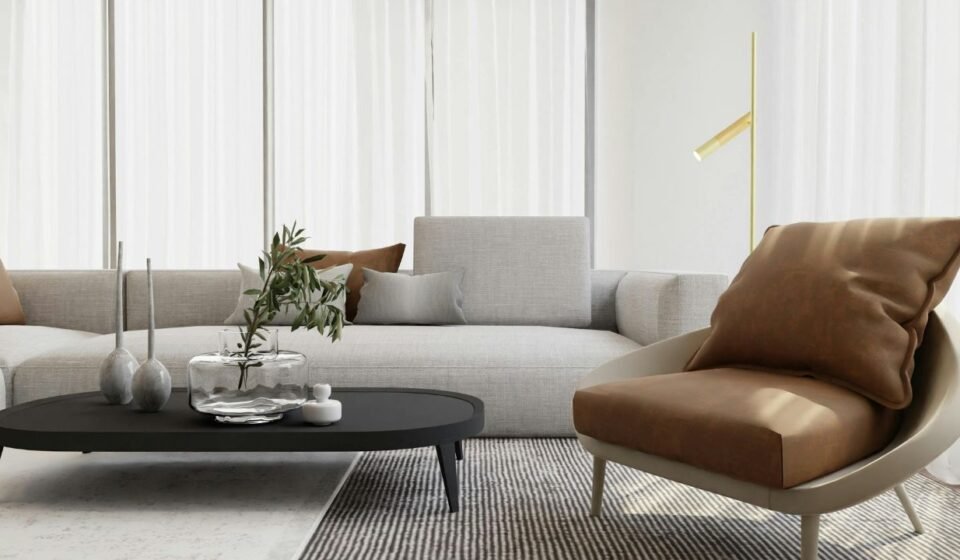

A small rental does not have to feel small — but most small-space advice assumes you can paint every wall, drill wherever you want, and rip out a closet door if it’s in the way. Renters don’t get that luxury. You’re working with walls you can’t touch, fixtures you can’t replace, and a lease that might end before your decorating plans do.
The good news: almost everything that makes a compact space feel bigger and calmer is naturally renter-friendly to begin with. Multifunctional furniture, mirrors, smart color choices, and freestanding storage don’t need a single hole in the wall. The few tricks that normally do involve drilling — vertical storage, corner solutions — have damage-free versions that work just as well.
These 15 ideas are built around that reality: nothing here requires paint, permanent fixtures, or anything you can’t undo the day you move out.
1. Start With the Largest Piece of Furniture
Before buying decorative accessories, look at the largest item in the room.
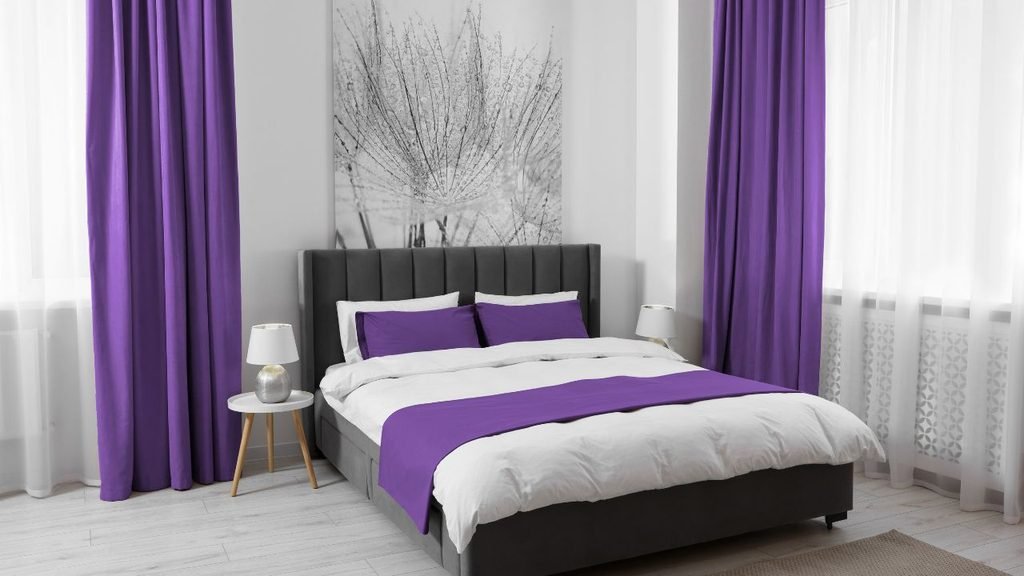
In a small living room, that might be the sofa. In a bedroom, it is usually the bed. If that main piece is oversized, everything around it becomes harder to arrange — and in a rental, you often can’t fix a bad layout by knocking down a wall or extending a room.
Choose furniture with a compact profile, slim arms and, when practical, visible legs. Furniture that allows some floor to remain visible can create a lighter appearance than bulky pieces that sit heavily on the floor.
A simple rule helps:
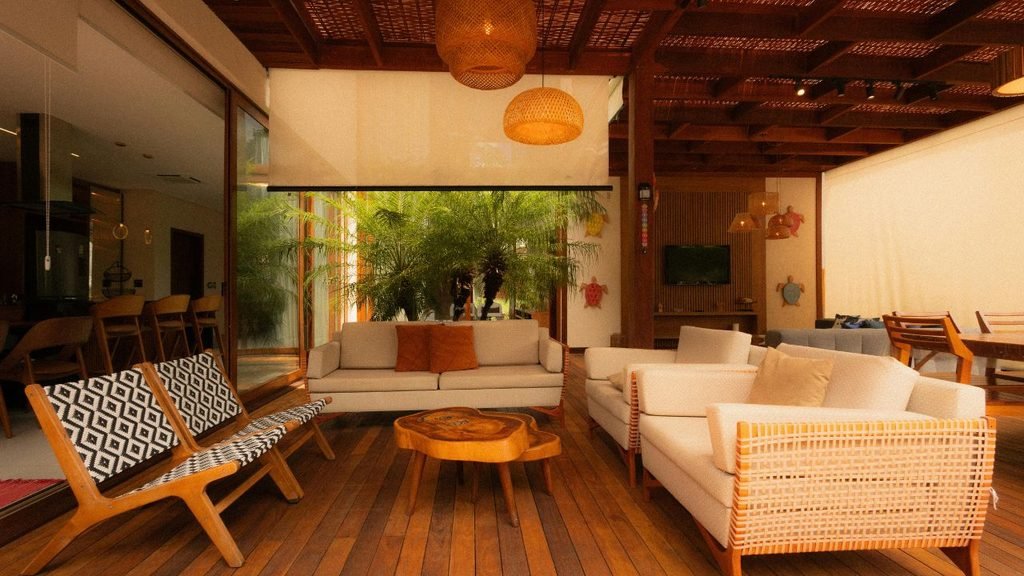
Measure first. Decorate second.
Leave enough space for comfortable movement between major pieces rather than trying to squeeze one more item into the room. This matters even more for renters, since you’re also thinking about how the piece will fit through doorways and into the next place.
This is one of the most effective principles in decorating small spaces because good proportions often matter more than the number of decorative objects.
2. Make Vertical Space Part of the Design — Without Drilling
When floor space is limited, look upward. Walls can provide storage, decoration and even workspace without taking valuable walking space away from the room — and none of it has to involve a drill.
Damage-free ways to go vertical:
- Freestanding ladder shelves (no wall attachment needed)
- Tall narrow bookcases
- Command Strip–mounted floating shelves rated for the weight you need
- Tension-rod shelving units that wedge floor-to-ceiling
- Over-the-door organizers and hooks
- Adhesive pegboards
- Hanging planters on tension rods or freestanding stands
- Leaning wall art instead of hung art
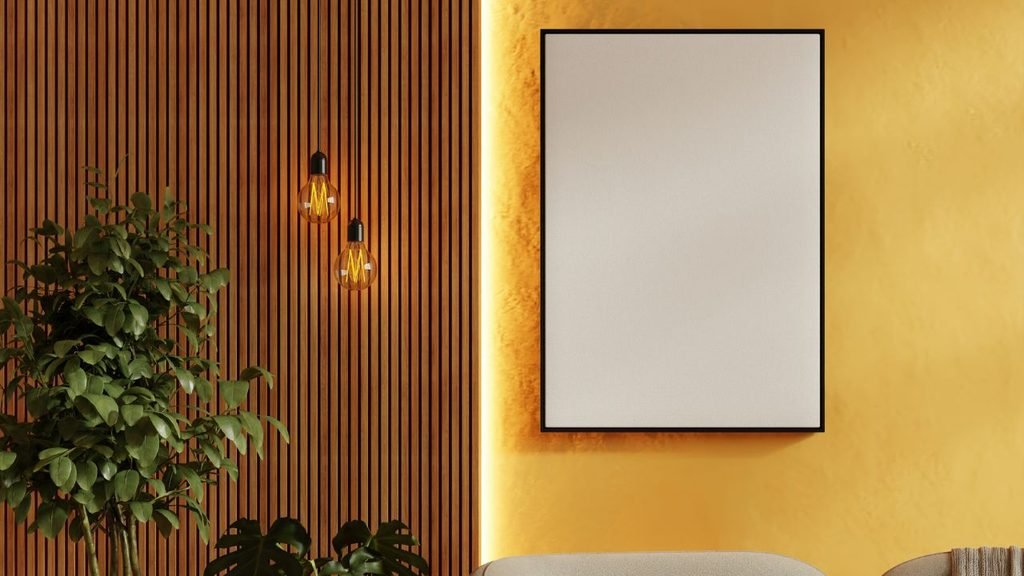
A narrow, freestanding shelving unit can often hold books, baskets and decorative objects while occupying far less floor width than a traditional wide bookcase — and it moves with you.
The goal is not to cover every wall. Create one or two useful vertical zones and leave some wall space open. That combination gives the room storage without making it feel visually overloaded, and it keeps your security deposit intact.
3. Choose Furniture That Does More Than One Job
Multifunctional furniture is one of the smartest forms of space-saving decor for renters, because it solves a storage problem without touching a single wall.
A small home rarely needs furniture that performs only one task when a better alternative can perform two or three.
Consider:
Other Article: Small Laundry Room Organization: 10 Clever Space Hacks
- An ottoman with hidden storage
- A bed with drawers underneath
- A coffee table with shelves
- A fold-down desk that mounts with strips, not screws (or a freestanding one that folds flat)
- A console that doubles as a workspace
- Nesting tables
- A bench with internal storage
- A sofa bed for flexible rooms

Imagine a tiny apartment where a desk occupies one entire corner even though it is used for only a few hours a day. A folding desk can disappear when work is finished, returning that area to the room — and it comes with you when the lease ends.
That is the difference between simply buying smaller furniture and designing intelligently.
4. Use Mirrors to Increase the Sense of Space
A strategically placed mirror can make a compact room feel brighter and more open, and mirrors are one of the easiest renter-friendly upgrades available — most can lean, hang from an existing hook, or mount with adhesive strips instead of screws.
Instead of automatically choosing the largest possible mirror, consider what it will reflect.
A mirror opposite a window can reflect daylight deeper into the room. A mirror positioned toward an attractive architectural feature can also duplicate that visual focal point.
For small-space renter decor, try:
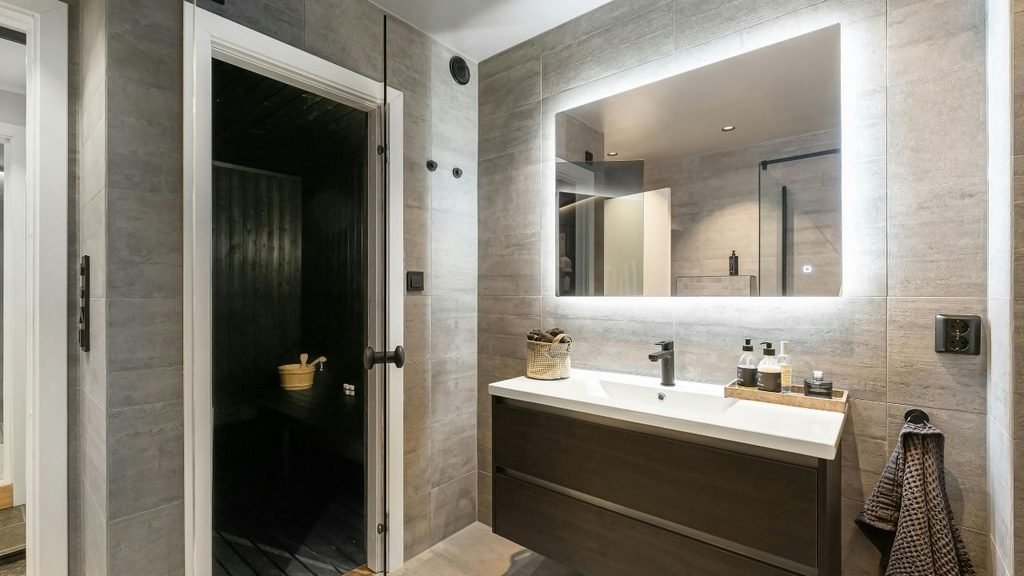
- One large mirror leaned against a wall rather than hung
- A tall narrow mirror near an entry
- Mirrored furniture (a cabinet or wardrobe you already own)
- A group of small adhesive-mounted mirrors arranged as artwork
- A round mirror above a compact console
Avoid covering every available wall with reflective surfaces. One well-positioned mirror can have more impact than several randomly placed ones.
5. Keep the Color Palette Connected
One common problem in compact rooms is visual fragmentation. Too many contrasting colors can make a small space feel divided into several separate areas. A more connected palette allows furniture, walls and accessories to visually relate to one another — which matters even more when you can’t repaint the walls to match anything.
Since the wall color is fixed, build the palette around it instead of fighting it.
Try combinations such as:
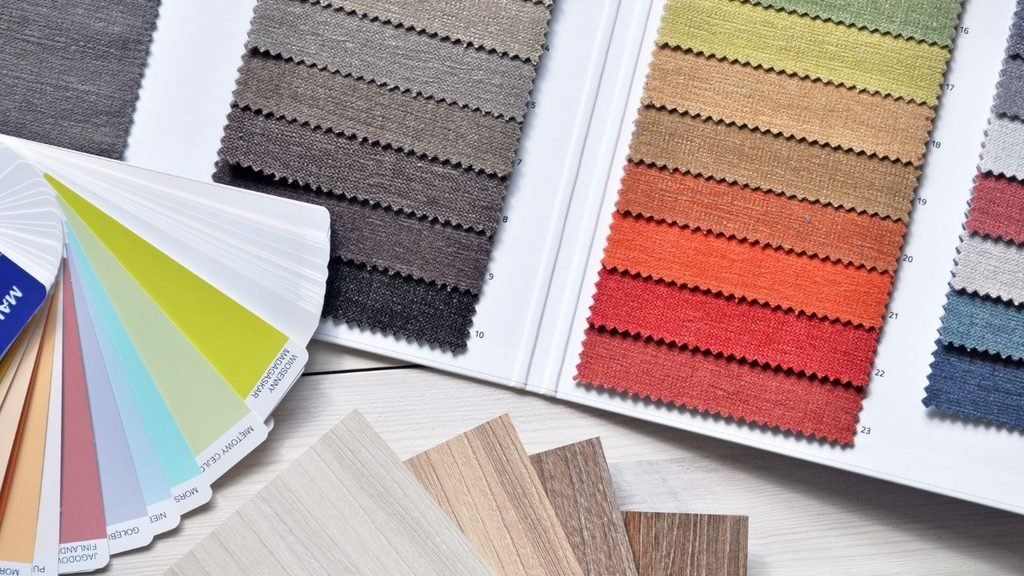
- Warm white walls + natural wood + beige textiles
- Builder-beige walls + cream + muted green accents
- Off-white walls + black accents + light oak
- Neutral wall + pale blue + warm white
- Light gray wall + sand + ivory + terracotta accents
The important part is maintaining a visual relationship between the major surfaces you can control — furniture, textiles, rugs — even when the wall color isn’t your choice.
Then add personality through texture, artwork, plants, cushions or one carefully chosen accent color.
6. Let Light Do Some of the Decorating
Good lighting is particularly important in small space decor because shadows can make an already compact room feel tighter — and lighting is one of the easiest upgrades for a renter, since almost none of it requires permanent wiring.
Instead of depending entirely on one ceiling fixture, layer several sources of light:
- General light: existing ceiling fixture
- Task light: a plug-in desk or reading lamp
- Accent light: a battery-powered or plug-in wall sconce, or LED strip lights with adhesive backing
- Atmospheric light: a small table lamp
- Related Article: Sofa Design Living Rooms: 12 Creative Layout Principles
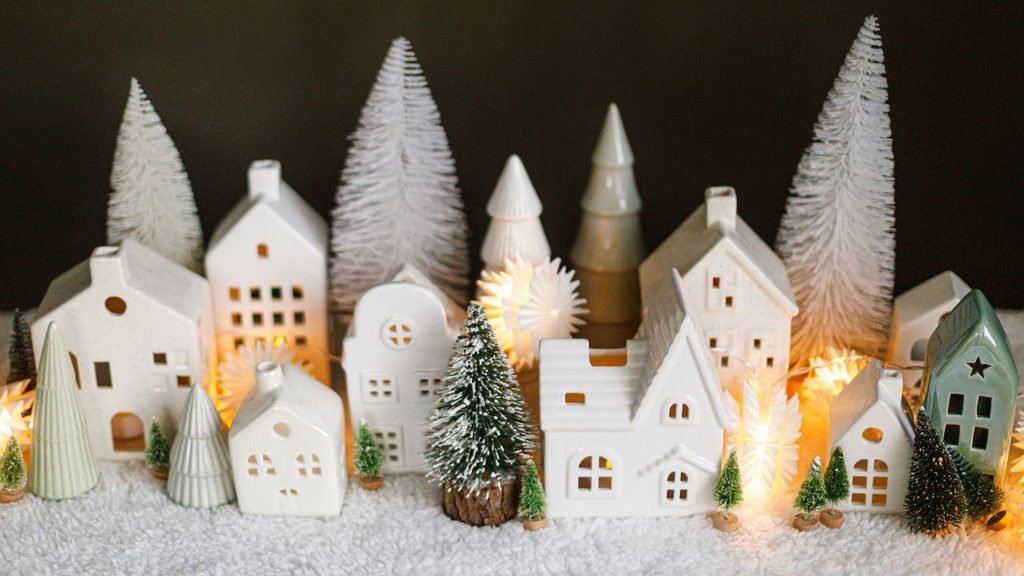
Plug-in wall sconces and adhesive LED strips are worth calling out specifically — they give you the layered, “designed” look of hardwired sconces without an electrician or a landlord’s permission slip.
Warm, comfortable lighting can transform the atmosphere in the evening without adding another large decorative object.
7. Give Every Item a Home
Beautiful decoration quickly becomes clutter when everyday objects have nowhere to go. This is where small-space organization becomes part of the decorating process — and none of it requires built-ins.
Instead of asking only: “Where can this be stored?”
Ask: “Where will this be easiest to put away?”
Use baskets near the places where clutter naturally appears:
- A basket near the sofa for blankets
- A tray near the entrance for keys
- Drawer organizers for small bathroom items
- Bins inside open (freestanding) shelving
- Hooks on an adhesive strip near the entry for frequently used bags
- Under-bed containers for seasonal belongings
Organization works best when it follows everyday habits rather than fighting them.
8. Use One Statement Piece Instead of Many Small Decorations
A small room does not necessarily need small artwork. In fact, several tiny decorative pieces can sometimes make a wall feel busier than one larger statement piece — and one large piece is often easier to hang or lean than a dozen small ones needing a dozen holes.
A single oversized print, leaned against a wall or hung from a single adhesive strip, above a sofa, bed or compact dining table can create a clear focal point.
The same principle can work with:
- A large round mirror
- A sculptural pendant that plugs in (no hardwiring)
- A distinctive rug
- One dramatic plant
- A textured throw or headboard slipcover
The room gets a visual anchor without requiring a collection of unrelated accessories — or a wall full of nail holes.
9. Choose Transparent or Visually Light Materials
Some furniture occupies physical space without making the room feel equally heavy. Glass, acrylic and other visually lighter materials can help maintain an unobstructed sightline.
A compact glass coffee table, for example, still provides a useful surface while allowing more of the floor and surrounding furniture to remain visible.
This can work particularly well in:

- Small living rooms
- Studio apartments
- Compact dining areas
- Narrow hallways
- Small home offices
Use the technique selectively. One transparent piece can create openness; an entire room full of transparent furniture may simply look disconnected.
10. Turn Awkward Corners Into Useful Zones — Without Built-Ins
That strange corner beside the window or narrow area at the end of a hallway does not automatically need to become dead space, even if you can’t build anything permanent into it.
Look for freestanding solutions that can fit naturally into it:
- A reading nook with a floor lamp and a slim chair
- A compact desk on wheels
- A plant display on a freestanding stand
- A narrow storage station (a tall, thin cart or shelf)
- A coffee station on a bar cart
- A small dressing area with a leaning mirror
- A fold-flat workspace against the wall
- Related Article: Multi-Functional Furniture With Hidden Storage: 9 Picks
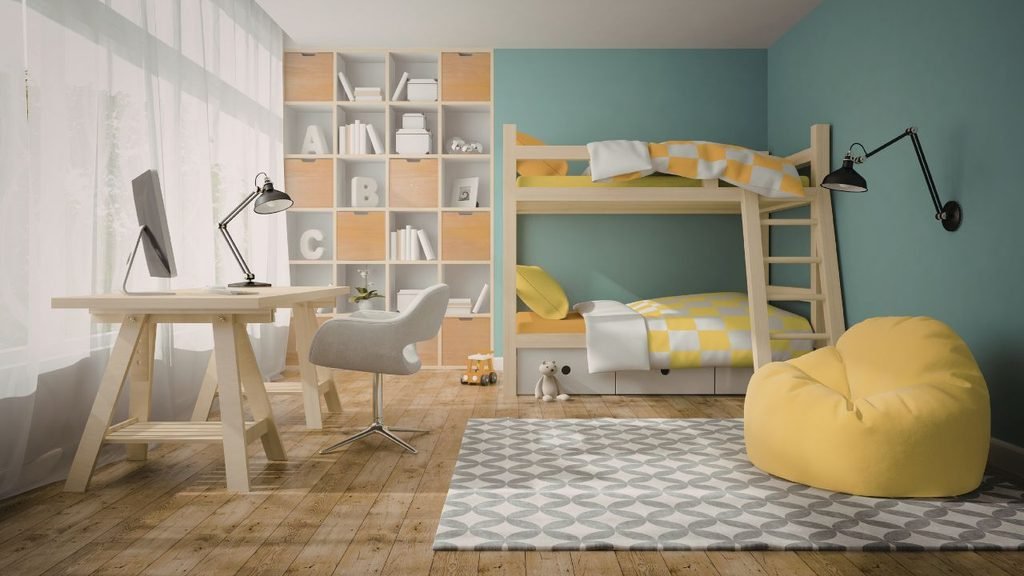
For renters especially, these overlooked areas can be particularly valuable because the room does not gain additional square footage — but it gains additional function, and everything in it leaves with you.
11. Keep the Floor as Visible as Possible
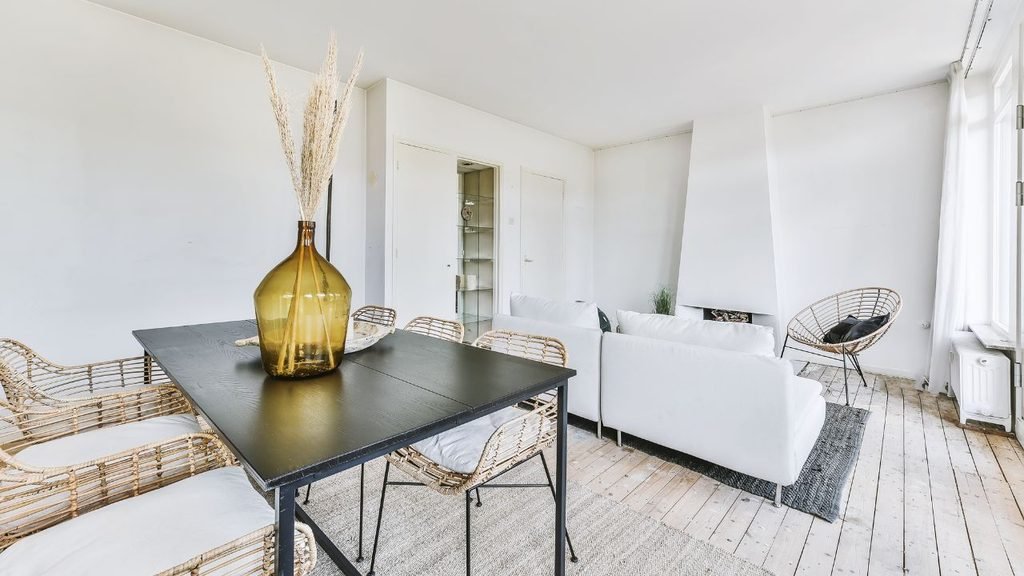
Visible floor can create a stronger sense of openness. This is why furniture with exposed legs and freestanding shelving units can work so well in compact rooms.
Instead of filling the lower part of every wall, allow some space underneath furniture.
For example, a sofa with visible legs can create more visual separation from the floor than a large solid base. The same idea works with:
- Bed frames
- Consoles
- Chairs
- Small cabinets
- Side tables
It is a subtle change, but several pieces following the same principle can make the entire room feel lighter.
12. Use Rugs to Define Areas Without Building Walls
Small homes often need to serve several purposes at once. A studio apartment might contain a bedroom, living room, dining area and workspace in one open room — and a rug is one of the only zoning tools a renter can use with zero restrictions.
Place a rug beneath the main seating arrangement to establish the living area. A smaller rug can visually separate a bed or dining zone.
This is one of the easiest renter-friendly ideas for creating structure while keeping the room open, precisely because it requires no permission, no tools, and no damage.
Just make sure the rug is appropriately sized. A tiny rug floating in the middle of a large arrangement can make the furniture appear disconnected.
13. Try Nesting Furniture for Flexible Space
Some furniture only needs to be large when it is being used. Nesting tables are a classic example.
Most of the time, the smaller tables can remain tucked underneath the largest one. When guests arrive, they can be separated to provide additional surfaces.
The same principle can be applied to:
- Folding chairs
- Drop-leaf tables
- Stackable stools
- Folding desks
- Extendable dining tables
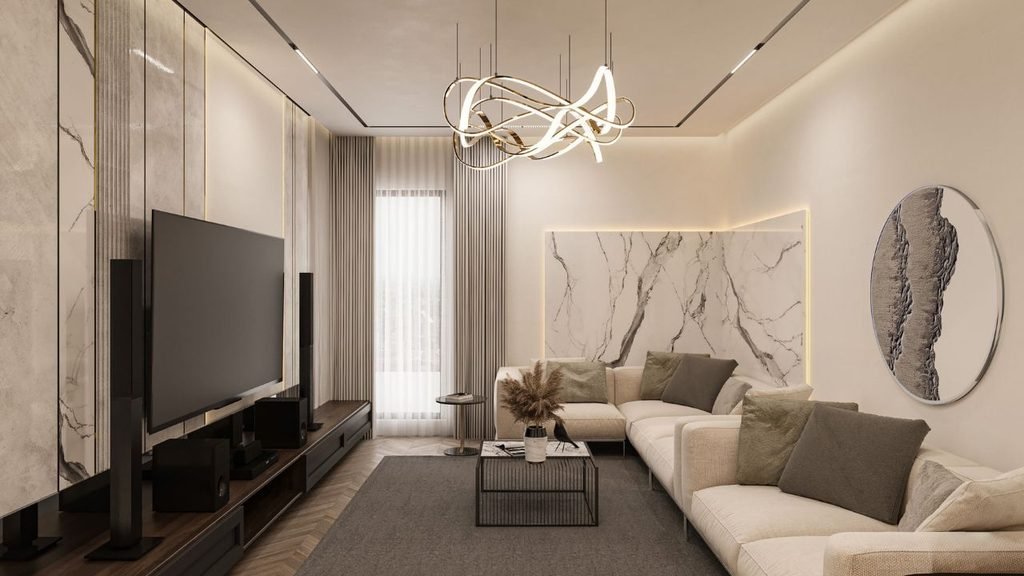
This approach is particularly useful for renters furnishing a minimalist small space, because the room can remain visually simple until additional functionality is actually needed — and every piece is freestanding and easy to move.
14. Decorate With Storage Instead of Fighting It
Storage does not have to look purely functional, and it does not need to be built in to look intentional.
Baskets, boxes, cabinets and shelves can become part of the room’s design. Choose storage containers that complement the existing colors and materials.
For example, natural woven baskets can add texture to a neutral bedroom, while matching fabric boxes can make open shelving look calmer.
Closed storage is useful when there are many visually unrelated items. Open, freestanding shelving works better when the objects themselves contribute to the decoration.
A good balance might be:
Related Article: How to Decorate a Rental Apartment Without Painting
70% practical storage + 30% display.
The exact ratio does not matter as much as the principle: not everything needs to be visible, and none of it needs to be permanent.
15. Leave Some Empty Space
Perhaps the most overlooked small-space decorating idea is doing less.
When every shelf, wall and tabletop is decorated, the room has nowhere for the eye to rest. Empty space is not wasted space — it helps important objects stand out.
Leave part of a shelf empty. Keep some wall visible around artwork. Avoid covering every surface with accessories.
A small rental can feel luxurious when it has enough breathing room. The objective is not to make the home look empty. It is to make each chosen item feel intentional.
What About Walls You Can’t Paint or Drill?
This is the question that separates renter decorating from every other kind, so it’s worth answering directly.
- Instead of paint: use removable wallpaper, a large leaned canvas, or a fabric wall hanging draped over a tension rod.
- Instead of drilled shelving: use Command Strip shelves rated for your load, tension-rod units, or freestanding ladder shelves.
- Instead of a hung gallery wall: lean a few large pieces against the wall at varying depths, or use a single adhesive picture rail designed for rentals.
- Instead of built-in closet systems: use freestanding wardrobe racks, over-the-door organizers, and stackable drawer units.
- Instead of hardwired lighting: use plug-in sconces, battery-powered puck lights, and adhesive LED strips.
Always check your specific lease and your specific adhesive product’s weight rating before hanging anything — “renter-friendly” products vary a lot in what they can actually hold.
How to Decorate a Small Rental Without Making It Feel Crowded
If the room already feels cluttered, do not begin by buying more storage. Start with a reset.
Remove everything that does not belong in the room. Then group the remaining items according to how frequently they are used.
- Everyday objects should be easiest to reach.
- Occasional objects can move into closed storage.
- Decorative objects should earn their space by adding beauty, texture or personality.
Once the room is edited, look at the furniture arrangement again.
- Can a bulky side table be replaced with a nesting table?
- Can a floor lamp move to a plug-in wall sconce?
- Can a rarely used desk become a folding workspace?
- Can the area underneath the bed become organized storage?
These small decisions add up. The result is not simply a room with fewer things. It is a room where the things that remain have a purpose — and where nothing is stuck to the wall permanently.
Small-Space Decorating Ideas for Different Rooms
Small Living Room Start with the sofa and create a clear walking path around it. Add one focal point, such as a leaned piece of art or a mirror, and use a compact coffee table with storage if additional organization is needed. Avoid filling every corner with accent furniture.
Small Bedroom Keep the bed as the visual center and use freestanding furniture around it intelligently. A slim nightstand can save floor space, while under-bed storage bins can handle seasonal belongings. A plug-in wall sconce clipped to the headboard or nightstand can eliminate the need for a bedside floor lamp.
Small Kitchen Use a tension-rod shelf or a freestanding rolling cart for frequently used items instead of drilled shelving. A narrow rolling cart can provide additional storage while remaining movable — useful for a kitchen you’ll eventually move out of. Keep countertops as clear as possible, since visual clutter is particularly noticeable in small kitchens.
Small Entryway A narrow console, a Command Strip hook rail, and a small tray can create an organized landing zone without requiring much floor space or any drilling. A leaned mirror above the console adds both function and visual depth.
Small Home Office Choose a desk based on the actual tasks performed rather than the size of a conventional office desk. A folding or fold-down-with-adhesive-mounted workspace can be ideal when the office needs to disappear at the end of the day — and needs to travel with you at the end of the lease.
Budget-Friendly, Renter-Friendly Decorating
A small-rental makeover does not automatically require replacing all the furniture, and it definitely doesn’t require anything that would put your deposit at risk.
Under $25
- Storage baskets
- Drawer organizers
- Command Strip hooks
- Small trays
- Cushion covers
- Adhesive shelf organizers
Around $25–$75
- Freestanding floating-look shelves (Command Strip–rated)
- Leaning wall mirrors
- Plug-in compact lamps
- Small rugs
- Decorative storage boxes
- Tension-rod shelving units
Bigger-impact upgrades
- Multifunctional furniture
- Freestanding storage units
- Folding desks
- Storage beds
- Compact sofas
- Modular shelving that travels well
Before buying anything, measure the available area — and check what your specific adhesive or tension product is rated to hold. A beautiful piece that blocks a doorway, or a shelf that pulls paint off the wall when you move out, is not a decorating solution. It’s a new problem (and a possible deposit deduction) wearing nice clothes.
Common Small-Space Decorating Mistakes (Renter Edition)
Buying furniture before measuring A few centimeters can determine whether a piece fits comfortably or makes the room difficult to navigate.
Assuming you need to drill or paint to make an impact Almost every high-impact small-space trick — mirrors, rugs, layered lighting, multifunctional furniture — needs neither.
Filling every empty corner Empty space can make a room feel larger. Not every corner needs furniture.
Using too many tiny accessories Several small objects can create more visual noise than one larger statement piece.
Ignoring vertical storage because “renters can’t do that” Walls still provide valuable space when floors are already full — tension rods, freestanding ladder shelves, and rated adhesive strips exist specifically for this.
Choosing style over function A beautiful chair that nobody can comfortably use is not successful small-space design.
Making everything match perfectly A coordinated palette is helpful, but a room can still have personality. Mix textures and introduce a few meaningful accents.
Related Article: Small Entryway Decor Ideas to Make Tiny Foyers Look Bigger
A Simple 30-Minute Small-Space Reset
When the room feels overwhelming, try this quick process.
- Minutes 1–5: Remove rubbish and obvious clutter.
- Minutes 6–10: Return misplaced objects to their proper rooms.
- Minutes 11–15: Clear one major surface.
- Minutes 16–20: Remove three decorative items that no longer add anything.
- Minutes 21–25: Reconsider one piece of furniture that blocks movement.
- Minutes 26–30: Add one finishing touch — a plant, cushion, lamp, leaned artwork or neatly arranged basket.
Thirty minutes will not redesign an entire apartment, but it can reveal what the room actually needs.
Frequently Asked Questions
How do you decorate a small rental without damaging the walls? Lean instead of hang where possible, use Command Strips or tension rods rated for the weight involved, choose freestanding furniture and shelving over built-ins, and rely on plug-in lighting instead of hardwired fixtures. Always check the weight rating on adhesive products before committing.
How do you decorate a very small space? Begin with furniture proportions and movement paths. Choose multifunctional pieces, use damage-free vertical storage, keep the color palette connected around your fixed wall color, and avoid filling every available surface.
What colors make a small rental look bigger? Since you usually can’t repaint, build your palette around the existing wall color using light, visually connected furniture and textiles — warm whites, soft neutrals and pale muted tones tend to be the most flexible.
What furniture is best for small apartments? Look for multifunctional, compact, freestanding and flexible furniture. Storage ottomans, nesting tables, folding desks, storage beds and slim-profile seating can provide more function without requiring any permanent installation.
How can a small rental look expensive without permanent changes? Focus on proportion, consistency and restraint rather than the number of expensive objects. A coordinated color palette, quality-looking (plug-in) lighting, one strong leaned or freestanding focal point, and uncluttered surfaces can create a polished appearance with zero wall damage.
Is minimalist decor good for small rentals? Yes, but minimalism should not mean removing everything that makes a home comfortable. Minimalist small-space decor works best when each item has a clear function or contributes meaningful visual interest — and when nothing depends on a permanent fixture you don’t own.
Final Thoughts
Successful small-space decorating for renters is less about making a tiny home look bigger and more about making every part of it work harder, without risking a single dollar of your deposit.
A compact rental can feel comfortable when furniture is correctly scaled, storage follows everyday habits, vertical space is used through damage-free methods, and decorative choices remain intentional. Ideas like multifunctional furniture, mirrors, tension-rod shelving, flexible tables and layered plug-in lighting can create noticeable improvements without a single hole in the wall.
The most important lesson is simple: do not try to fill the space — design the space, and make sure every part of the design leaves with you
Start with one problem. Improve the layout. Remove unnecessary visual noise. Add storage where it genuinely helps. Then introduce the decorative details that make a rented home feel like yours.