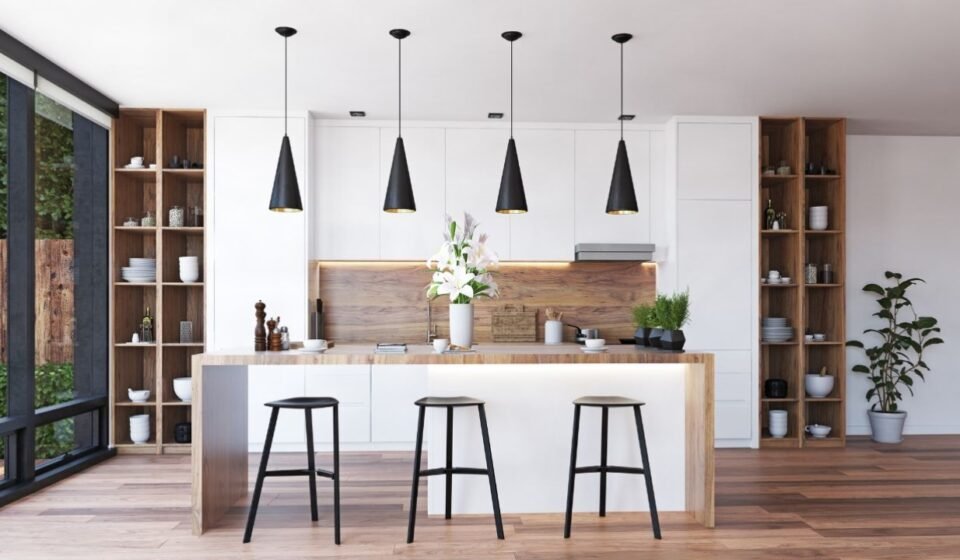

Bring the coast in with better light
Coastal style is easy to recognize: relaxed colours, natural texture, and enough breathing room to make a kitchen feel like a place to linger. The lighting, however, has to do more than look beachy. The right coastal kitchen lighting fixtures should help with chopping, serving, cleaning, and late-night snack decisions without turning the room into a showroom or a lighthouse.
This guide breaks down 11 useful lighting ideas, from woven pendants to toe-kick lights. It also covers spacing, colour temperature, moisture safety, glare control, and the practical details that matter once the pretty fixture arrives in a box.
| Quick takeaway: Layer ambient, task, and accent light. A coastal kitchen feels most natural when no single fixture is asked to do every job. |
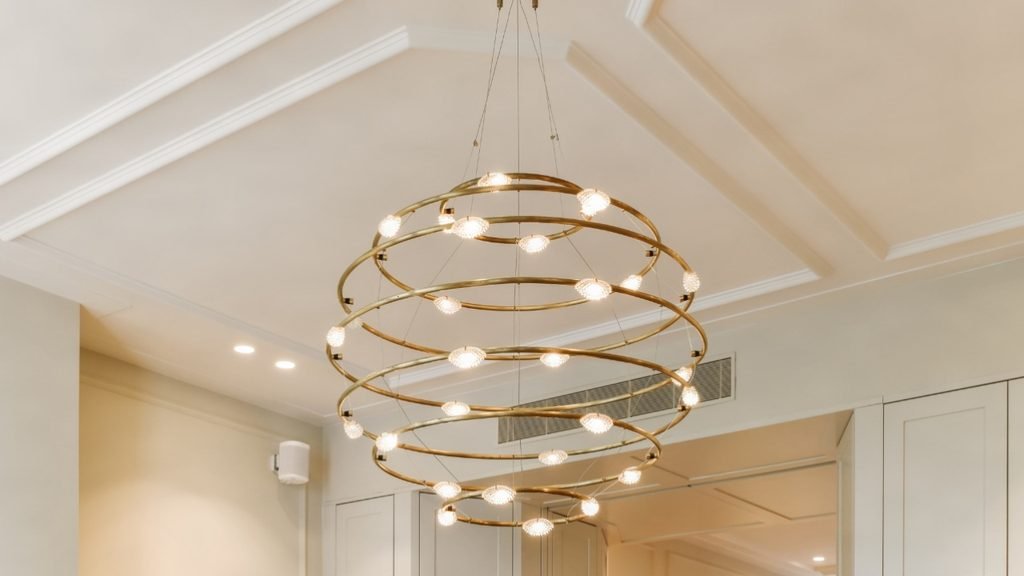
Why lighting matters in a coastal kitchen
Layered light gives the room flexibility. Ambient light fills the kitchen, task light helps on work surfaces, and accent light adds depth around shelves, artwork, or architectural details. Together, those layers make pale cabinetry and reflective surfaces feel warm rather than flat.
Glare control is especially important in coastal rooms because white paint, glossy tile, stainless steel, and stone can bounce light in every direction. Frosted shades, opal glass, carefully aimed recessed lights, and dimmers help soften reflections. A fixture that looks charming in a product photo can be surprisingly bossy over a bright island.
Choose a warm but usable colour temperature, generally around 2700K to 3000K. It keeps timber, brass, rattan, and creamy paint looking inviting while preserving enough clarity for food preparation. A high colour-rendering index, ideally CRI 90 or higher, helps ingredients and finishes look more accurate.
Scale matters, too. A tiny pendant can disappear above a long island, while an oversized shade can interrupt sightlines. Moisture matters near sinks and dishwashers: check the fixture’s damp- or wet-location rating rather than assuming a sealed-looking shade is safe. Final electrical work should follow local code and be completed by a qualified professional.
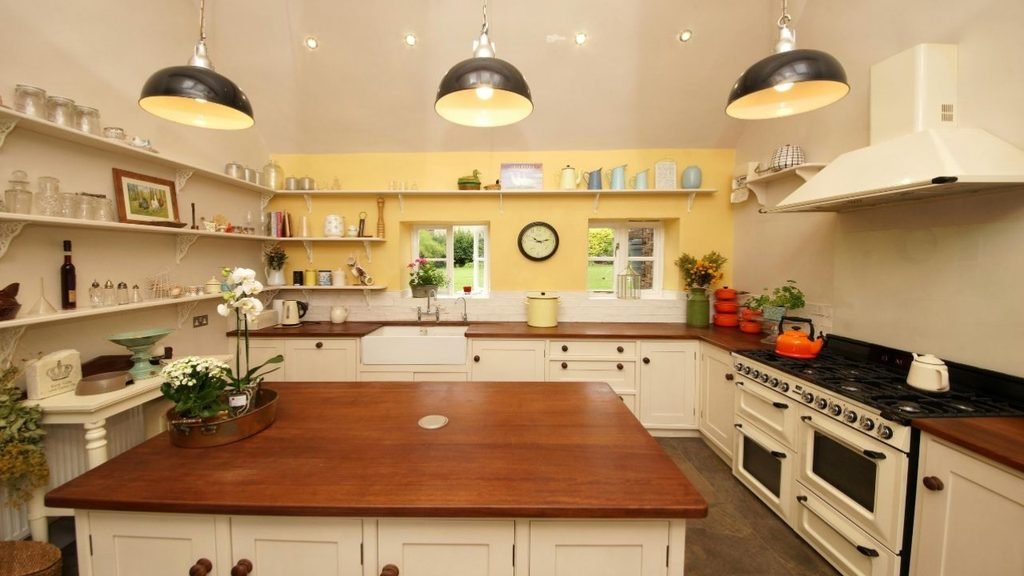
11 coastal kitchen lighting fixtures worth considering
There is no requirement to use all 11 ideas. Start with the room’s work zones, then choose the fixtures that solve real problems while supporting the relaxed coastal look.
1. Woven pendants for warm texture
Rattan, seagrass, and cane pendants bring organic texture above an island or breakfast table. Their open weave creates gentle shadow patterns and keeps a pale kitchen from feeling overly polished. Choose a shade with a smooth, sealed surface if grease and dust will be frequent visitors.
For spacing, keep the outer pendants roughly 6 to 12 inches inside the island ends. With three fixtures, a common starting point is 24 to 30 inches between shade centres, adjusted for fixture diameter and sightlines. Mount the bottom of a pendant about 30 to 36 inches above the countertop, then fine-tune for anyone who regularly works beneath it.
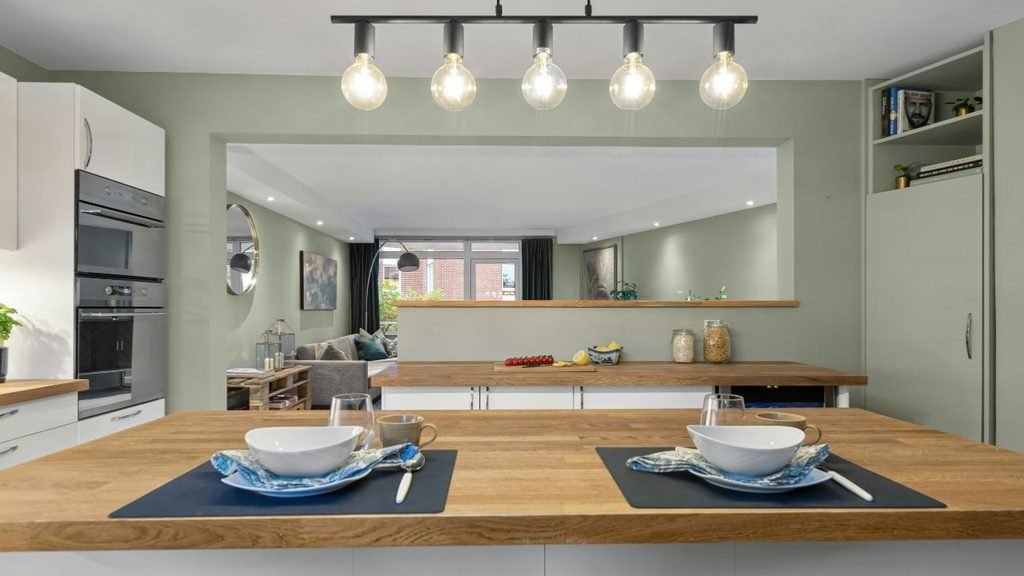
2. Clear glass pendants for visual lightness
Clear glass keeps sightlines open and works well in a smaller kitchen or a room with a low ceiling. It lets the bulb become part of the design, so choose a soft-white LED with a frosted finish or a decorative filament that is comfortable to look at. If the bulb is exposed, a dimmer becomes especially useful.
Glass also reveals fingerprints, flour, and the occasional evidence of enthusiastic cooking. Select a shade with a wide opening for easier cleaning and confirm that replacement bulbs are standard sizes rather than specialty pieces.
3. A linear island light for long worktops
A linear fixture distributes light evenly across a long island without requiring a row of separate pendants. It can feel tailored and calm in a coastal kitchen, especially in aged brass, matte black, brushed nickel, or a painted finish that echoes the cabinetry.
Look for a fixture that is about one-half to two-thirds the island’s length, leaving visible countertop at both ends. The light should illuminate the work surface without becoming the first thing seen from the living area. Confirm ceiling-box placement before buying; a beautifully proportioned fixture is less useful when its junction box is several inches off centre.
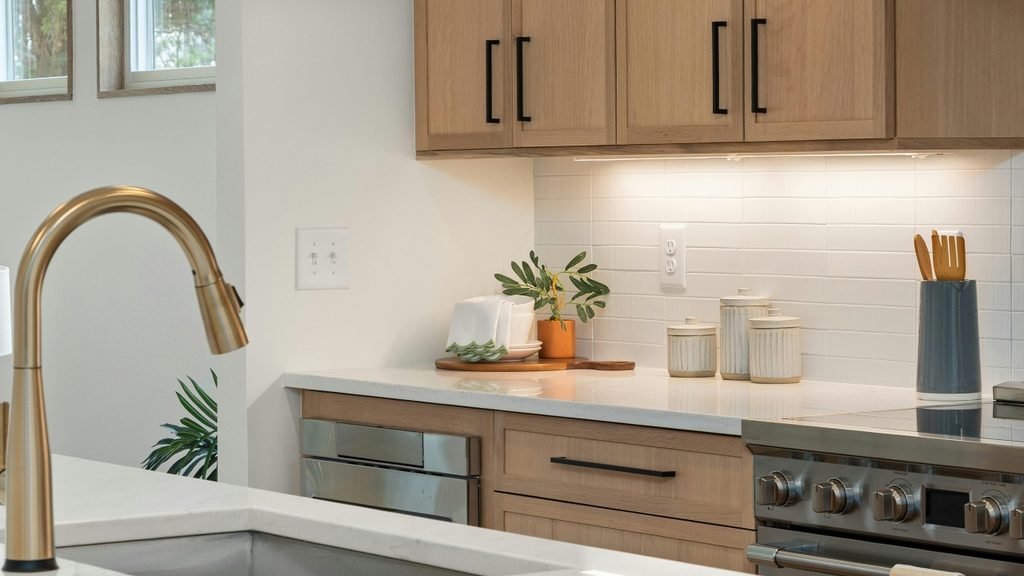
4. Wall sconces for a sink or open shelving
Sconces add useful side light where an overhead fixture may cast a shadow. A pair beside a window, mirror, or open shelf can frame the sink zone and make the kitchen feel more layered. Adjustable arms are helpful when the same surface serves both food preparation and entertaining.
Position sconces so the light source is not directly at eye level. Check the fixture’s damp-location rating near a sink, and favour shades that can be wiped clean. If wall wiring is difficult, plug-in sconces can be a practical interim solution, provided cords are routed safely and neatly.
5. Under-cabinet lighting for everyday task work
Under-cabinet strips or puck lights put illumination exactly where knives, recipes, and coffee grounds tend to gather. Choose a continuous strip for even coverage and hide the channel near the cabinet’s front edge so the light washes the backsplash rather than shining into the room.
Warm-white LEDs around 2700K to 3000K suit most coastal palettes. Select a high-CRI option, add a dedicated dimmer or control, and plan access to the driver for future replacement. This is one of the least dramatic upgrades and one of the most noticeable at 6:45 a.m.
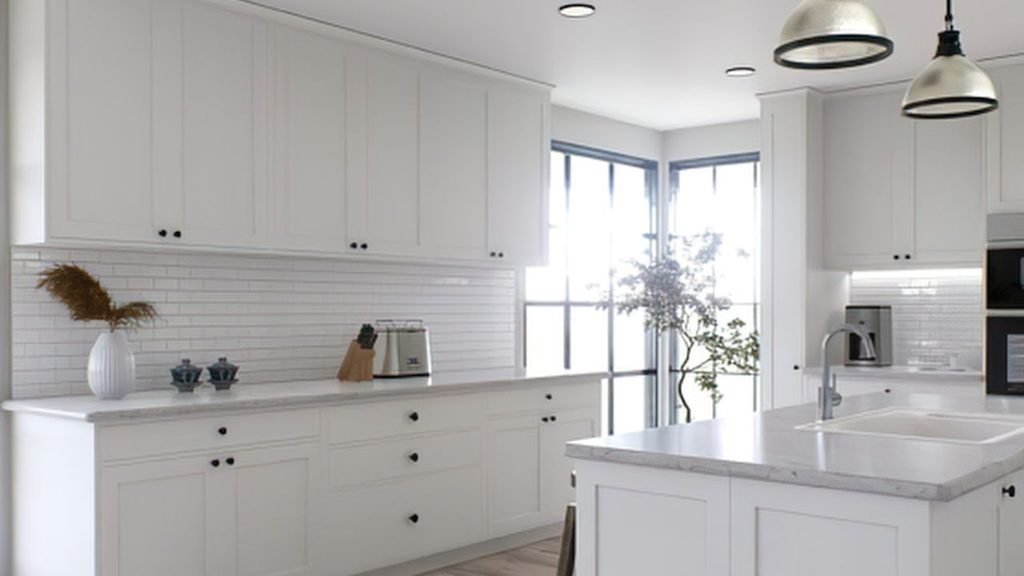
6. Recessed lights for balanced ambient coverage
Recessed fixtures can provide calm, even ambient light when they are spaced around the room rather than packed into a grid. Aim them at circulation paths and work zones, not directly above upper-cabinet doors where the light may disappear into the joinery.
Use fewer, better-placed fixtures with wide beams instead of creating a constellation of bright spots. Adjustable trims can help highlight a backsplash or pantry, but avoid aiming them toward glossy counters where reflections become distracting.
7. A flush-mount ceiling light for lower ceilings
A flush or semi-flush mount is a sensible choice when ceiling height makes pendants impractical. Look for a slim profile, a diffuser that reduces glare, and enough output for the room’s general lighting. Linen, ribbed glass, or a simple painted metal shade can support coastal character without resorting to a wheel, rope, or anchor motif.
Measure the fixture’s diameter against the room. A useful starting point is to add the room’s length and width in feet, then use that number in inches for a proportional ceiling-light diameter. Adjust for cabinetry, ceiling height, and the amount of natural light.
8. Toe-kick lighting for a soft evening layer
Toe-kick LEDs create a low glow beneath base cabinets and islands. They are not a substitute for task lighting, but they make midnight trips safer and give the kitchen a gentle after-hours atmosphere. Use a warm 2700K setting and a low output so the floor glows rather than shouts.
A recessed channel or concealed strip produces a cleaner result than exposed dots. Put toe-kick lighting on a separate switch or smart control, and leave enough access for maintenance. The best version is noticed as ambience, not identified as a row of tiny bulbs.
9. Dimmers for changing the mood
A dimmer is a small control with an outsized effect. Bright light works for prep and cleanup; a lower setting suits breakfast, homework, or a dinner that deserves more atmosphere than a ceiling full of glare. Use compatible LED lamps and dimmers, and check for flicker or buzzing before committing to a large installation.
Keep task lighting and decorative lighting on separate circuits when possible. That arrangement lets the island remain practical while the rest of the room settles into a softer evening level.
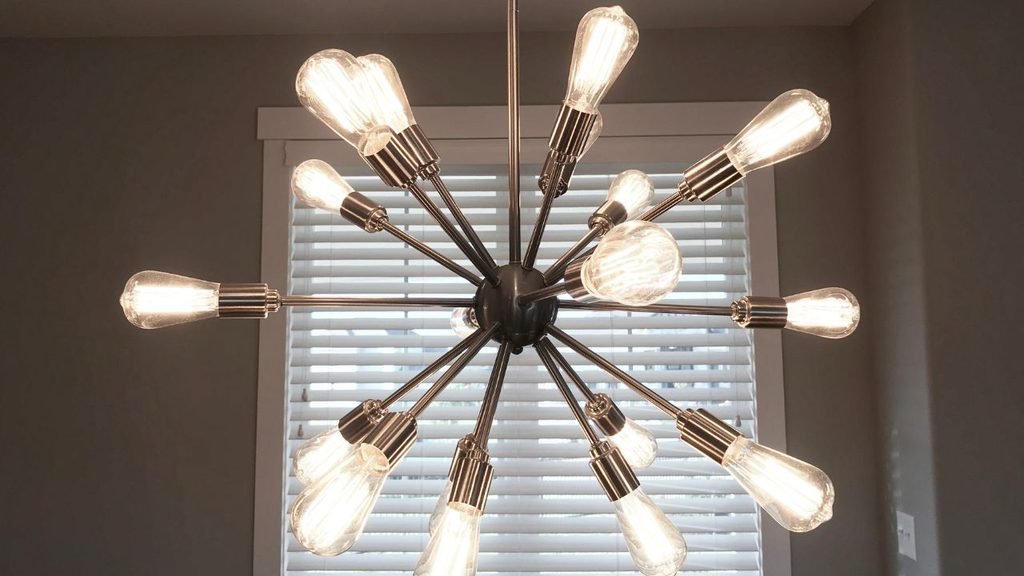
10. A statement fixture over a breakfast nook
A sculptural fixture can give a coastal kitchen a focal point without making the island carry all the visual weight. Consider a woven globe, pleated shade, aged metal lantern, or sculptural ceramic form above a table or seating area. The fixture should echo the room’s materials rather than announce a literal seaside theme.
Keep the bottom of a dining-area fixture roughly 30 to 36 inches above the tabletop, then adjust for eye level and the height of anyone seated nearby. A statement fixture deserves breathing room, so avoid placing it where a cabinet door or tall vase competes with it.
11. A layered fixture plan for the whole room
The final idea is not one product but a coordinated system: ambient ceiling light, focused island or counter light, and a low or decorative accent layer. This approach makes coastal kitchen lighting fixtures feel intentional instead of collected one purchase at a time.
Start by marking the island, sink, range, prep counter, pantry, and dining zone on a simple plan. Give each work area useful light, then add only the accents that improve comfort or atmosphere. When shopping for coastal kitchen pendant lights for sale, compare the actual dimensions, lumen output, shade opening, cord or rod length, and return policy—not just the staged photo.
Connect the lighting to the rest of the room
Lighting looks most convincing when it belongs to the wider design story. For modern coastal kitchen ideas, pair clean-lined fixtures with one or two tactile materials such as rattan, oak, linen, or aged metal. A room does not need every finish to be the same; repeating one finish in small doses is usually enough.
Use coastal kitchen backsplash ideas as a lighting test. Glossy tile may need softer, more carefully aimed light, while matte tile can handle stronger directional illumination. Bring a tile sample home and view it at morning, afternoon, and evening colour temperatures before choosing a bulb.
Seating and textiles matter as well. A dining pendant should relate to the table, while kitchen bar stools with backs need enough clearance that a pendant does not hang at face level. A washable runner can add warmth underfoot; if searching for the right size, the phrase buy coastal kitchen runner rug may lead to useful product comparisons, but measure the walkway first.
For visual references, houzz modern coastal kitchen photos can help with proportions and fixture placement. Retail browsing, including wayfair coastal kitchen decor, can reveal current finishes and price ranges. Treat inspiration and inventory as starting points, then verify the specifications of the exact product.
Practical shopping checklist
Before adding a fixture to the cart, answer these questions:
- Room size: How much ambient light is needed, and where will shadows fall?
- Ceiling height: Will a pendant preserve comfortable sightlines and head clearance?
- Island length: Is the fixture one-half to two-thirds of the island, or are several pendants better?
- Finish: Does the metal coordinate with taps, handles, appliances, or another repeated detail?
- Shade material: Can the glass, fabric, cane, or metal be cleaned easily near cooking zones?
- Bulb replacement: Are bulbs standard, included, replaceable, and available locally?
- Wiring: Are there suitable boxes, switches, circuits, and dimmer compatibility?
- Budget: Does the total include bulbs, mounting hardware, installation, and possible rewiring?
Online product pages and marketplace inventory change. Verify measurements, ratings, lead times, bulb details, and return conditions on the current listing before buying. A screenshot from last month is not a wiring plan.
Mistakes to avoid
- Too many nautical motifs: A rope detail can be charming; a full fleet of anchors, oars, and ship wheels can make the kitchen feel themed rather than coastal.
- Cool blue-white bulbs: Bulbs above 4000K can make whites look stark and timber look grey. Start around 2700K to 3000K instead.
- Undersized pendants: Tiny shades vanish above a large island and often leave the centre work area underlit.
- Unshielded glare: Exposed bulbs at eye level can overpower the room. Use diffusers, thoughtful mounting heights, and dimmers.
- Ignoring work zones: A beautiful fixture over the island cannot illuminate every counter, sink, range, and pantry safely.
FAQ
How high should pendant lights hang above a kitchen island?
Start with the bottom of the shade about 30 to 36 inches above the countertop. Adjust for the shade size, ceiling height, sightlines, and the people using the island. The final height should illuminate the worktop without blocking conversation.
What bulb colour is best for a coastal kitchen?
A warm-white range of roughly 2700K to 3000K usually balances comfort and clarity. Choose CRI 90 or higher when possible so food, paint, wood, and tile appear more natural.
How many pendants should go over an island?
Two or three pendants are common, but the right number depends on island length, shade diameter, and the fixture’s light output. Maintain clear spacing, keep the outer fixtures inside the island ends, and avoid crowding the work surface.
Do woven shades work near a kitchen sink?
They can work when the specific fixture is suitable for the location and the material is sealed or easy to clean. Check the manufacturer’s damp-location rating, keep the shade away from direct splashes, and choose glass or metal instead when moisture and grease exposure are high.
A brighter, calmer coastal kitchen
The best coastal kitchen lighting fixtures make daily tasks easier while preserving the room’s easygoing character. Begin with work zones, choose 2700K to 3000K light with strong colour rendering, control glare, and use texture with restraint.
Next, measure the room and island, mark the fixture positions, and compare the current specifications before ordering. A thoughtful layered plan will do more for comfort than a single trendy purchase—and it will still look good after the novelty of the first unboxing wears off.