

A small pantry can hide a surprising amount of food. Cans get pushed behind cereal boxes, snacks slide out of reach, and duplicate groceries take up space you don’t have.
The right pantry organization ideas can make a compact kitchen easier to use without a remodel or costly custom storage. A few well-chosen changes can help you find ingredients faster and make each shelf work harder.
These ten ideas focus on practical zones, vertical space, clear storage, and simple upkeep. Start with the changes that fit your pantry and daily routine.
Pantry Organization Ideas Start With Useful Zones
Organize food by how you use it, not by the size or shape of its package. When similar items live together, you can see what you have and put groceries away faster.
Group groceries by category and purpose
Set aside areas for breakfast foods, snacks, baking supplies, canned goods, and cooking staples. If your household often packs lunches, keep lunchbox snacks together. A household that bakes often may want flour, sugar, and baking add-ins in one easy-to-reach spot.
Make the zones fit your shelves rather than forcing a rigid system. A narrow pantry might need small groups, while a wider pantry can hold separate bins for each category. Keep each zone contained so one spilled bag of rice doesn’t take over a shelf.
Give frequently used foods the easiest reach
Place everyday foods at eye level or near the front of the shelf. Keep less-used items, such as holiday baking supplies, higher up or farther back. This small change cuts down on rummaging during busy meals.
If children reach for their own snacks, place suitable options on a lower shelf. Store glass jars and heavy cans where they’re easy for adults to lift safely. A useful layout works for everyone who uses the kitchen.
Use Vertical Space to Expand a Small Pantry
When shelf width is limited, make better use of the space above each item. Before buying an organizer, measure the shelf’s width, depth, and height. Check the height of the packages you plan to store, too.
Recommended article: Wainscoting and Beadboard Styles for Every Room Today.
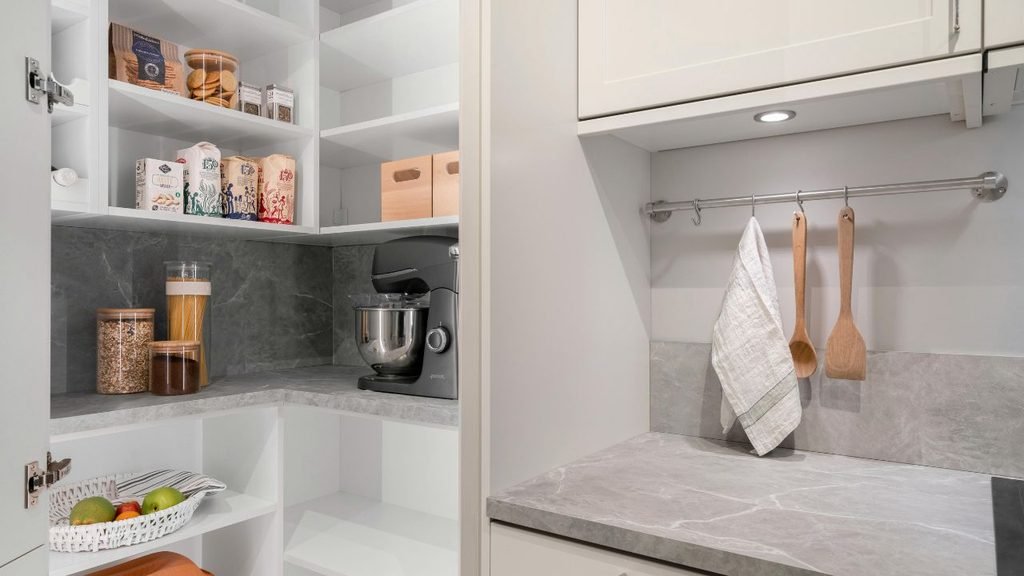
Add shelf risers for cans, jars, and spices
A shelf riser creates a second level, so items at the back stay visible. Use one for canned goods, small jars, or spice containers that would otherwise sit in a hard-to-see row. Choose a riser that fits the shelf without blocking the front or sides.
Check that the items underneath still fit once the riser is in place. A tall can on the lower level may leave too little room above it. If you can reach each item without shifting several others, the riser is doing its job.
Store tall or bulky items vertically
Baking sheets, trays, and cutting boards can take up less shelf space when stored upright. Use a divider or stable bin to hold them apart and stop them from tipping. This setup also makes it easier to pull out one tray without lifting a stack.
Slim packages, such as wraps or boxed pasta, may fit upright in a bin as well. Keep the bin steady and make sure its contents don’t lean into nearby food. Measure the shelf opening first, especially if the pantry has a narrow door.
Choose Containers That Improve Visibility and Control Clutter
Storage containers should fit the food and the shelf. Matching sets may look neat, but they won’t help if they waste space or make food hard to reach. Keep original packaging when it has useful cooking directions or storage details.
Decant frequently used dry goods into clear containers
Flour, rice, pasta, and cereal are good choices for clear containers if you use them often. You can check the amount at a glance and see when it’s time to restock. Pick shapes that fit your shelves, and use airtight containers when the food needs protection from air or moisture.
Only add food to a container that is clean and fully dry. Write the food name on a label, especially when two ingredients look alike. Keep the original package nearby if it has cooking instructions you rely on.
Use matching bins to corral small packages
Small packets can slip behind larger boxes or spread across a shelf. Place seasoning packets, snack bars, baking decorations, or tea bags in open bins. A bin keeps each group together while making it easy to pull the whole group forward.
Choose a bin with sides high enough to contain loose items but low enough for a quick glance. Removable bins work well on deep shelves because you can bring the contents within reach. Avoid filling them so tightly that you have to dig for one packet.
Related: Soft Glow Lighting for Cosy Vibes: Easy Ways to Make Your Home Feel Warm and Relaxing.
Put Pantry Doors and Deep Shelves to Work
Awkward spaces can add useful storage when shelf space is tight. Before adding anything, check how far the pantry door opens and whether an organizer will stop it from closing. Keep weight limits in mind, too.
Make pantry doors work with slim racks or pockets
A slim door rack can hold light, frequently used items such as spice packets, wraps, or small condiments. Use the rack for things that fit securely and won’t fall when the door moves. Keep heavier jars on the shelf unless the rack is built to hold them.
Check the door clearance with the rack loaded. Items may bump into shelves or prevent the door from closing all the way. A quick test with a few products can reveal problems before you fill every slot.
Put pull-out storage in deep or hard-to-reach areas
Pull-out baskets or bins help you reach food at the back of a deep shelf. They work well for grouped items such as cans, sauces, or baking supplies. Measure both the shelf and its opening before buying, since a bin must clear the frame when it slides out.
Keep similar products together inside each pull-out. That way, you can bring forward one group without sorting through a mix of groceries. Leave enough room for the bin to move freely.
Keep Pantry Organization Ideas Working Long Term
A good system should be easy to maintain on an ordinary weekday. Clear labels and a simple restocking habit help prevent new groceries from becoming another crowded pile.
Label containers and bins for quick identification
Use clear, readable labels that name what’s inside. Add a date when it helps you track an opened product or a food with a shorter shelf life. Keep labels easy to remove or update as your needs change.
Place labels where you can see them while the containers are on the shelf. For bins, label the front rather than the lid. That makes it easier to return items to the right place.
Set up a first-in, first-out restocking routine
When you bring home more of an item, move older packages to the front and put new ones behind them. This first-in, first-out habit helps you use what you already have before opening a newer package. It also makes older food less likely to get lost at the back.
Before shopping, scan the shelves and check what needs replacing. A quick look can prevent duplicate purchases and remind you about ingredients you already own. Put groceries away by zone as soon as you get home.
Recommended reading: Sofa Design Living Rooms: 12 Creative Layout Principles.
Frequently Asked Questions About Small Pantry Organization
1. How do you organize a pantry in a small kitchen?
To organize a pantry in a small kitchen, start by removing expired food and grouping similar items, such as canned goods, snacks, baking ingredients, and spices. Use stackable containers, adjustable shelves, clear storage bins, and vertical organizers to maximize available space. Keep frequently used items at eye level and store occasional-use ingredients on higher shelves.
2. What are the best pantry organization ideas for small spaces?
The best pantry organization ideas for small spaces include installing narrow pull-out shelves, using stackable storage bins, adding over-the-door organizers, and storing dry goods in clear containers. Wall-mounted racks and tiered shelf organizers can also create additional storage without taking up valuable counter space. Choose solutions that fit your pantry dimensions and make everyday items easy to reach.
3. How can I maximize pantry storage without adding more shelves?
You can maximize pantry storage without installing additional shelves by using vertical space more efficiently. Stack compatible containers, add shelf risers, use the inside of cabinet doors for lightweight items, and group small packages in labeled bins. Removing bulky packaging can also help you arrange food more efficiently, provided you keep important product labels and expiration information accessible.
4. Are clear containers better than original food packaging for pantry organization?
Clear containers can make pantry organization easier because they allow you to see food quantities at a glance and help keep dry ingredients neatly arranged. Airtight containers are especially useful for flour, rice, pasta, cereal, and other dry goods that need protection from moisture and pests. Always use clean, food-safe containers, and label them with the product name and relevant expiration or best-before information.
5. How do you organize a deep pantry so nothing gets lost?
To organize a deep pantry, place frequently used products near the front and reserve the back for less frequently used items. Clear pull-out bins, turntables where appropriate, and sliding baskets make it easier to access products without moving everything around. Avoid stacking food too deeply, and group similar ingredients together so you can quickly find what you need.
6. What is the cheapest way to organize a small pantry?
The cheapest way to organize a small pantry is to reuse suitable containers, small cardboard boxes, and baskets you already have at home. Arrange products by category, label storage areas, and use existing shelf height more efficiently before purchasing new organizers. If you need additional supplies, prioritize affordable shelf risers or stackable bins that solve a specific storage problem.
7. How should I organize a small pantry for a family?
For a family, divide the pantry into practical zones for breakfast foods, snacks, cooking ingredients, baking supplies, and canned goods. Keep frequently used products easy to reach, and consider placing suitable snacks on an accessible shelf so family members can find them independently. Use labels and simple storage rules to help everyone return items to their designated places and maintain an organized pantry.
8. How often should you reorganize your pantry?
A quick pantry check every week can help you identify low-stock items, remove expired products, and return misplaced packages to their proper locations. A more thorough reorganization every few months can help you adjust storage zones as your household’s needs change. Keeping older products toward the front and newer purchases behind them also helps you use food before its best-before date whenever appropriate.
Make Every Inch of Your Small Pantry Count
The most useful pantry organization ideas match your space and daily habits. Zones make food easier to find, vertical storage opens up shelf space, and clear bins help keep small items in view. Labels and a simple restocking routine help the system last.
You don’t need to reorganize the whole pantry today. Clear one shelf, measure it, and set up a useful zone before moving on to the next.
Related article: Small Entryway Decor Ideas to Make Tiny Foyers Look Bigger



[…] Related article: 10 Genius Pantry Organization Ideas for Small Kitchens That Make Every Inch Count […]
[…] Related guide: 10 Genius Pantry Organization Ideas for Small Kitchens That Make Every Inch Count. […]